Categoria Diritto UE

Diritto e politica dell'Unione europea

Una vecchia slide della NSA, ChatGPT e il problema di distinguere ciò che è segreto da ciò che è pubblico

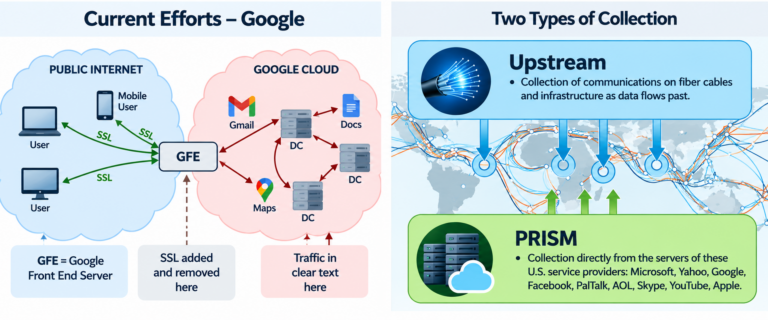
Oggi, mentre preparavo una lezione universitaria sulla raccolta delle informazioni nelle reti digitali, mi è capitato un piccolo episodio con ChatGPT che mi ha fatto riflettere sul modo in cui l’intelligenza artificiale interpreta le informazioni, soprattutto quando riguardano la sicurezza…

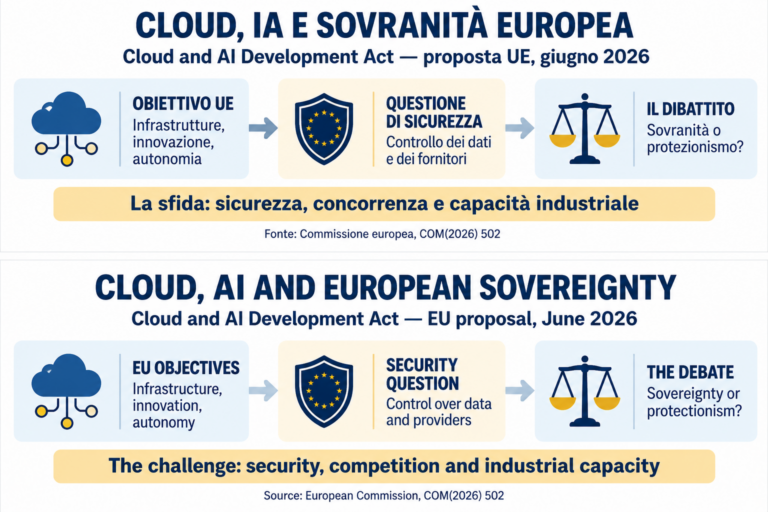
Cloud, intelligenza artificiale e sovranità europea: il nuovo terreno di confronto con gli Stati Uniti

Cloud, intelligenza artificiale e sovranità europea: il nuovo terreno di confronto con gli Stati Uniti Le dichiarazioni dell’ambasciatore americano presso l’Unione europea, Andrew Puzder, sul progetto europeo di regolamentazione del cloud e dell’intelligenza artificiale mi sembrano particolarmente interessanti, soprattutto se…

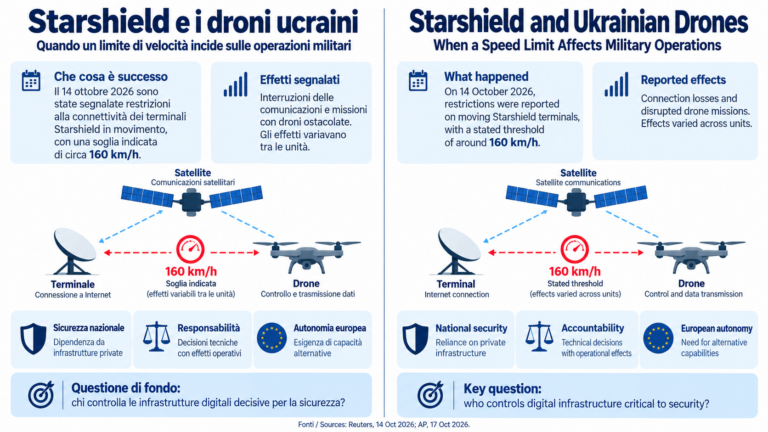
Starlink e i droni ucraini: quando un limite di velocità diventa una questione di sicurezza nazionale Starlink and Ukrainian Drones: When a Speed Limit Becomes a National Security Issue

La vicenda delle limitazioni imposte a Starlink in Ucraina è significativa, anche perché mostra quanto il funzionamento delle moderne capacità militari dipenda ormai da infrastrutture che gli Stati non controllano direttamente. Il problema, in questo caso, riguarda la velocità dei droni,…

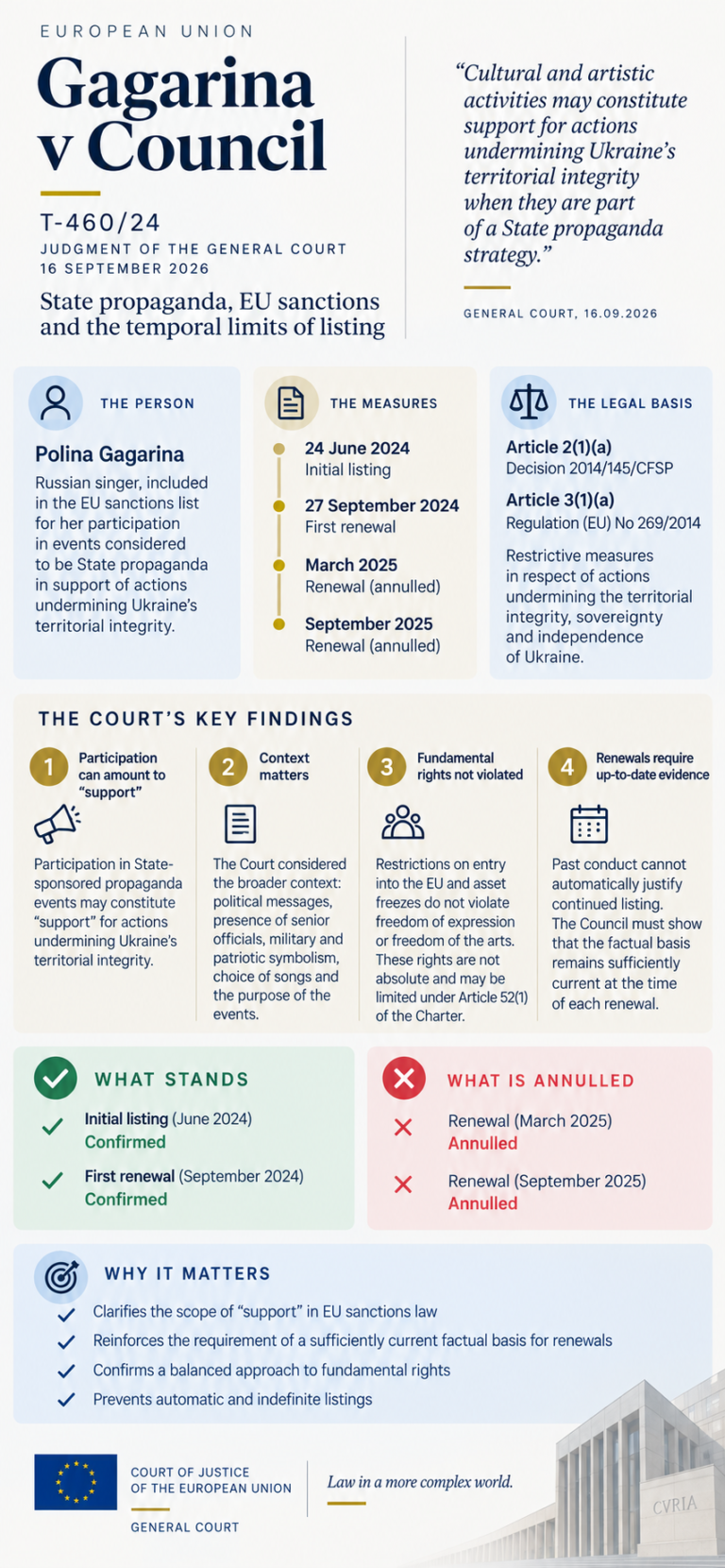
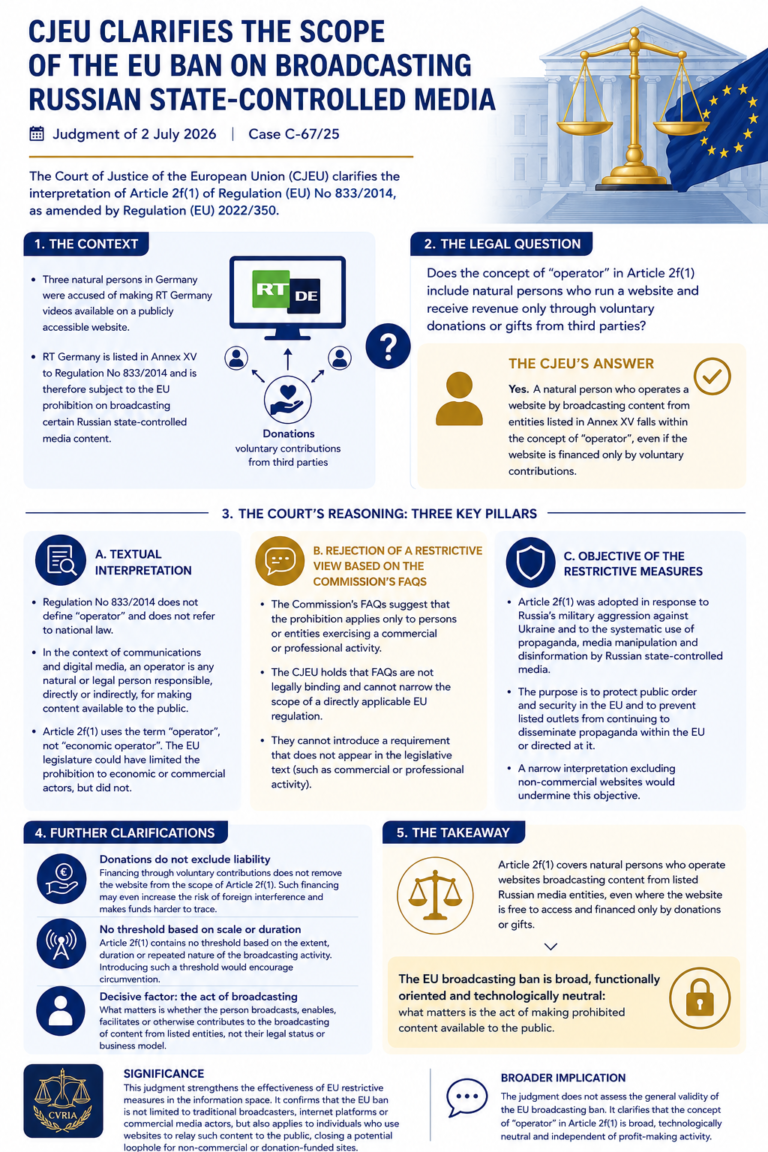
La Corte di giustizia chiarisce il divieto di diffusione dei media russi: non riguarda soltanto gli operatori commerciali

Aspettavo da tempo questa sentenza. Il rinvio pregiudiziale proveniente dalla Germania, nella causa C-67/25, poneva una questione apparentemente circoscritta, ma con conseguenze importanti per l’effettiva applicazione delle sanzioni europee contro la propaganda russa. Chi gestisce un sito Internet e diffonde…

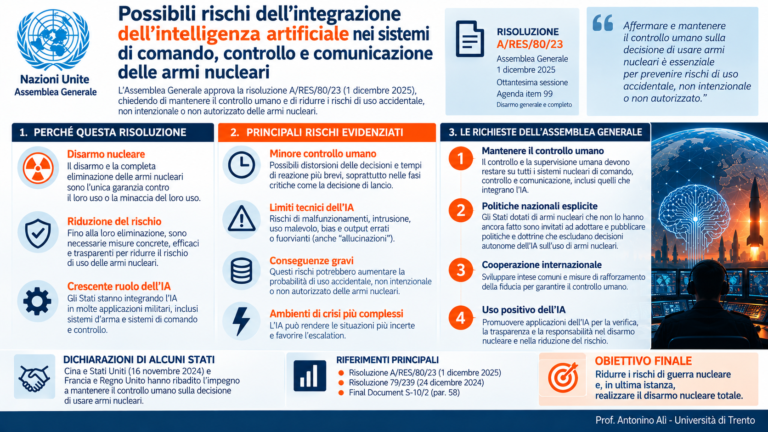
Possibili rischi dell’integrazione dell’intelligenza artificiale nei sistemi di comando, controllo e comunicazione delle armi nucleari

Il 1° dicembre 2025 l’Assemblea generale delle Nazioni Unite ha adottato la risoluzione 80/23 sui «Possible risks of the integration of artificial intelligence into command, control and communications systems of nuclear weapons». Il titolo delimita con precisione il problema: l’integrazione…

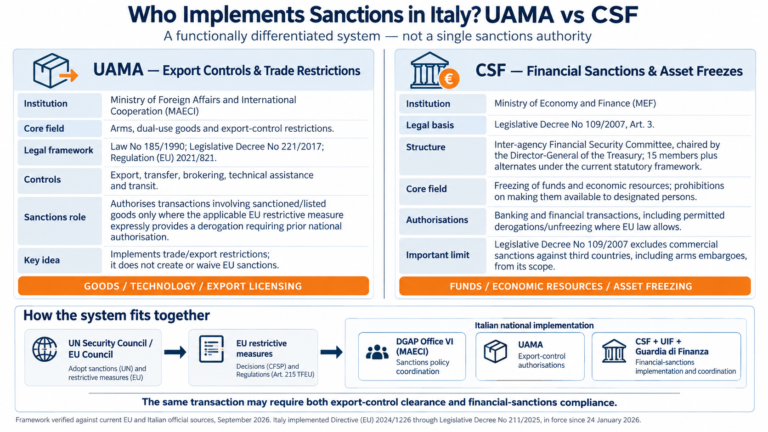
Who Implements Sanctions in Italy? UAMA, the Financial Security Committee (CSF), and a Deliberately Divided System

When lawyers speak of the “Italian sanctions authority”, the expression is convenient but potentially misleading. Italy does not entrust the implementation of international and European Union restrictive measures to a single administrative body. The national system is deliberately fragmented by…

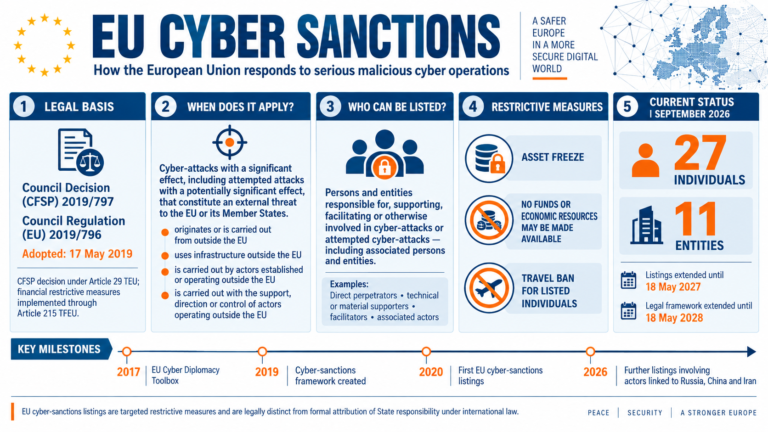
EU Cyber Sanctions: From Cyber Diplomacy to Targeted Restrictive Measures

Cyber operations have become an increasingly important dimension of international security. They may disrupt critical infrastructure, interfere with public institutions, compromise classified information or affect essential services without crossing a territorial border in the traditional sense. For the European Union,…

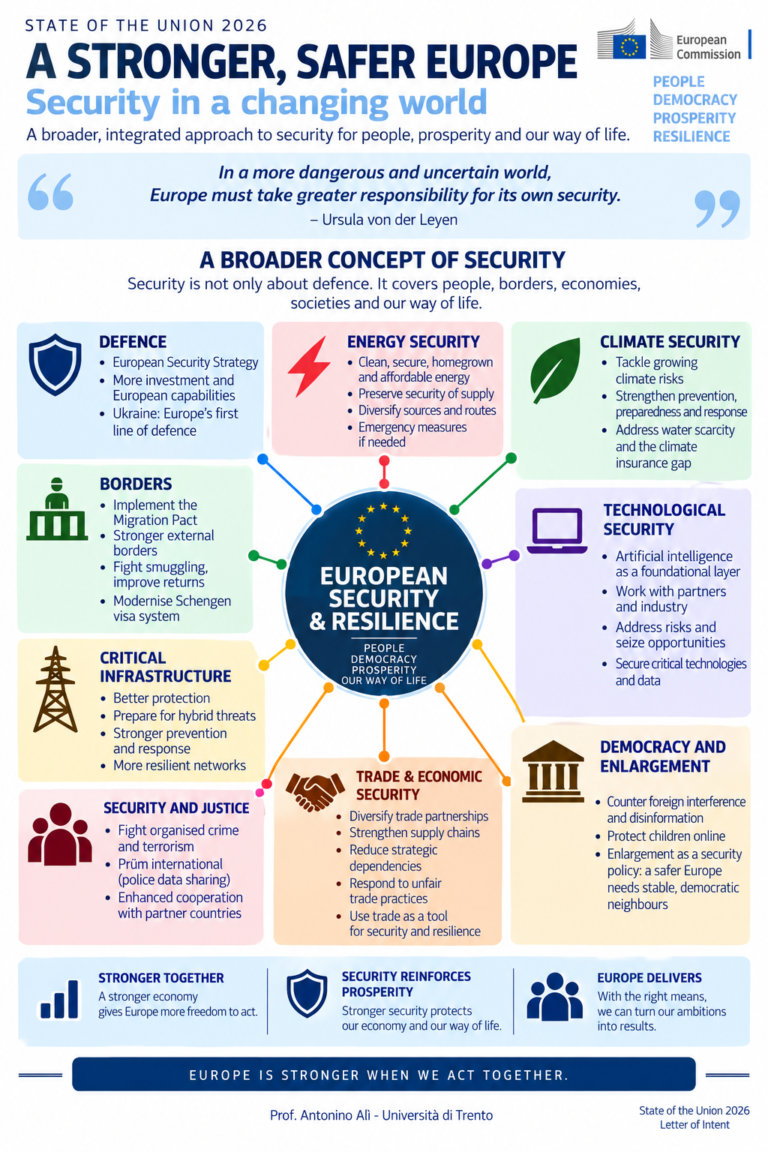
Security in the State of the Union 2026 – Letter of Intent

The document does not treat security as a self-contained policy field. Instead, security functions as a cross-cutting category connecting defence, borders, critical infrastructure, energy, democratic resilience, artificial intelligence, enlargement and economic policy. 1. European security and defence The clearest passage…

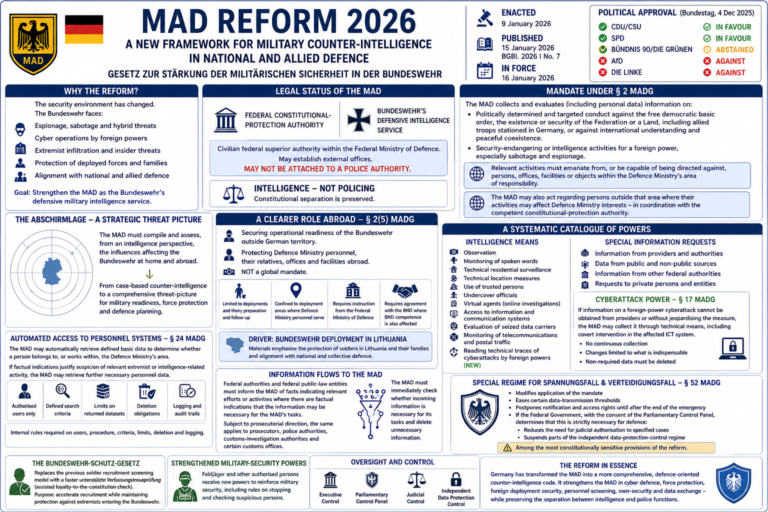
The 2026 reform of the Militärischer Abschirmdienst — MAD, the German Military Counter-Intelligence Service

Germany’s New Defence-Oriented Counter-Intelligence Code The 2026 reform of the Militärischer Abschirmdienst (MAD), the German Military Counter-Intelligence Service, is not a merely technical amendment. It constitutes a comprehensive re-legislation of German military counter-intelligence law and represents one of the most significant transformations…

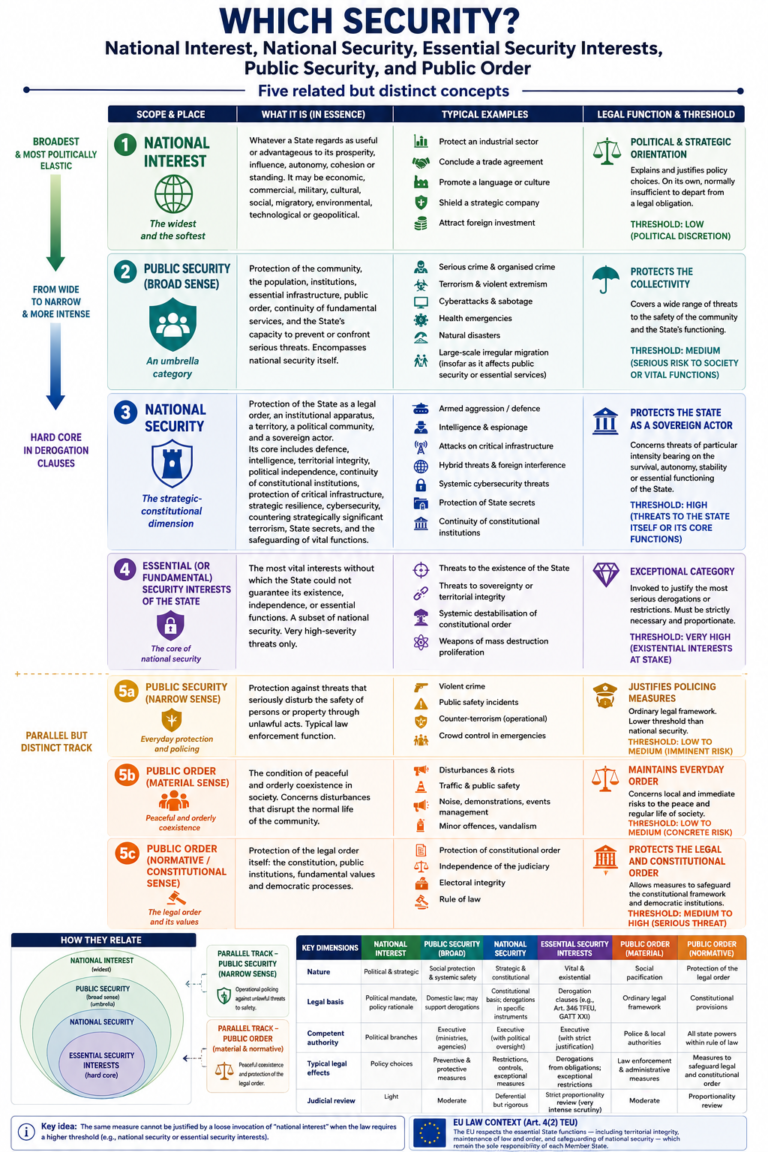
Which Security? National Interest, National Security, Essential Security Interests, Public Security, and Public Order

A vocabulary used loosely In contemporary legal and political debate, five expressions are made to carry a great deal of weight and are frequently treated as interchangeable: national interest, national security, essential (or fundamental) security interests of the State, public…

This website stores cookies on your computer. These cookies are used to provide a more personalized experience and to track your whereabouts around our website in compliance with the European General Data Protection Regulation. If you decide to to opt-out of any future tracking, a cookie will be setup in your browser to remember this choice for one year.

Accept or Deny