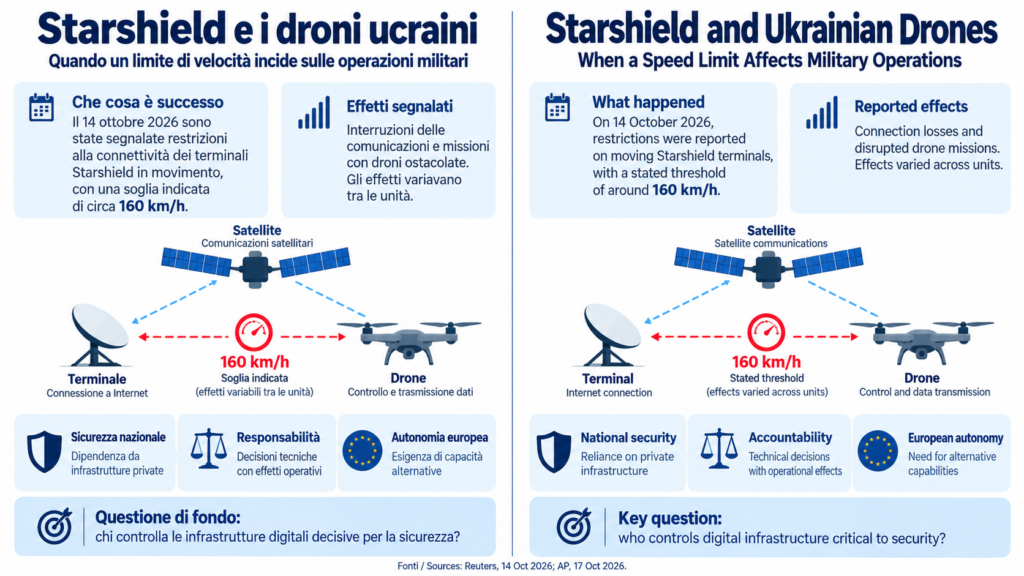

La vicenda delle limitazioni imposte a Starlink in Ucraina è significativa, anche perché mostra quanto il funzionamento delle moderne capacità militari dipenda ormai da infrastrutture che gli Stati non controllano direttamente. Il problema, in questo caso, riguarda la velocità dei droni, ma in un senso diverso da quello che si potrebbe immaginare. Nella notte tra il 13 e il 14 ottobre, secondo fonti del Ministero della Difesa ucraino, SpaceX avrebbe introdotto una limitazione al funzionamento dei terminali Starshield, la versione militare del sistema Starlink, quando si muovono a velocità superiori a circa 160 km/h. Non è dunque il drone a non poter volare più velocemente: è il sistema di comunicazione satellitare che può interrompere il collegamento oltre quella soglia.
Perché è importante? Alcuni droni russi a propulsione a reazione raggiungono velocità superiori ai 400 km/h. I droni intercettori ucraini devono quindi poter operare a velocità elevate, mantenendo il collegamento necessario per ricevere informazioni e, quando previsto, essere controllati a distanza. Se la connessione viene interrotta, il velivolo può continuare a funzionare perfettamente dal punto di vista meccanico, ma perdere la capacità di portare a termine la missione. Zelensky ha denunciato proprio questa conseguenza. Il 17 ottobre ha inoltre riferito che alcuni test effettuati con terminali Starlink installati su veicoli in Paesi dell’Unione europea avrebbero dimostrato il funzionamento del servizio anche oltre i 180 km/h. Un risultato che, secondo il presidente ucraino, dimostrerebbe che le restrizioni riguardano specificamente l’Ucraina. Occorre naturalmente distinguere queste dichiarazioni da una verifica tecnica indipendente: restano da chiarire le differenze tra i servizi e i terminali impiegati nei test, oltre a chi abbia deciso le limitazioni e per quali ragioni.
Trovo che questa vicenda sia particolarmente interessante per una ragione che va oltre il caso ucraino. Siamo abituati a considerare la dipendenza tecnologica soprattutto come un problema di approvvigionamento: acquistare componenti, disporre di determinate tecnologie, garantire la manutenzione dei sistemi. Qui emerge qualcosa di diverso. Uno Stato può possedere un sistema d’arma, disporre del personale necessario e avere tutte le capacità tecniche per utilizzarlo, ma scoprire che una funzione essenziale dipende dalle condizioni di accesso a un servizio gestito da un soggetto esterno. E quelle condizioni possono essere modificate senza intervenire materialmente sul sistema d’arma. È un esempio molto concreto di quanto sia necessario ripensare il rapporto tra autonomia strategica, sicurezza nazionale e controllo delle infrastrutture tecnologiche. La proprietà di un mezzo militare, da sola, non garantisce necessariamente la piena disponibilità delle capacità operative che quel mezzo dovrebbe assicurare.
Starlink and Ukrainian Drones: When a Speed Limit Becomes a National Security Issue
Starlink e i droni ucraini: quando un limite di velocità diventa una questione di sicurezza nazionale
The restrictions imposed on Starlink services in Ukraine deserve some attention, not least because they illustrate how dependent modern military capabilities have become on infrastructure that states do not directly control. The issue concerns drone speed, but not quite in the way one might expect. According to sources within Ukraine’s Ministry of Defence, during the night of 13–14 October, SpaceX introduced restrictions affecting Starshield terminals, the military version of its Starlink satellite communications system, when moving at speeds exceeding approximately 160 km/h. This does not mean that a drone is physically unable to fly faster. It means that its satellite connection may be interrupted beyond that threshold.
Why does this matter? Some Russian jet-powered drones can exceed 400 km/h. Ukrainian interceptor drones therefore need to operate at high speeds while maintaining the connections required to receive information and, where necessary, allow remote control. If that connection is interrupted, the aircraft may remain mechanically capable of flying but lose the ability to complete its mission. This is precisely the problem Zelensky has raised. On 17 October, he also reported that tests conducted with Starlink terminals installed in vehicles travelling through EU countries showed that the service continued operating at speeds exceeding 180 km/h. According to the Ukrainian president, this demonstrates that the restrictions specifically affect Ukraine. These statements, however, should not be confused with independent technical verification. Differences between the services and terminals used in the tests still need to be clarified, as does who decided to impose these restrictions and why.
Particularly interesting about this case is something that goes well beyond Ukraine. We tend to think of technological dependence primarily in terms of procurement: acquiring components, obtaining access to certain technologies and maintaining equipment. This case reveals a different problem. A state may own a weapon system, have the personnel to operate it and possess all the necessary technical capabilities, only to discover that an essential function depends on the terms under which an external provider supplies a service. Those terms can change without anyone physically interfering with the weapon itself. To me, this is a particularly concrete example of why we need to reconsider the relationship between strategic autonomy, national security and control over technological infrastructure. Ownership of military equipment does not, by itself, necessarily guarantee full control over the operational capabilities that equipment is supposed to provide.