After the Supreme Court: How U.S. Tariff Policy Was Rebuilt in 2026

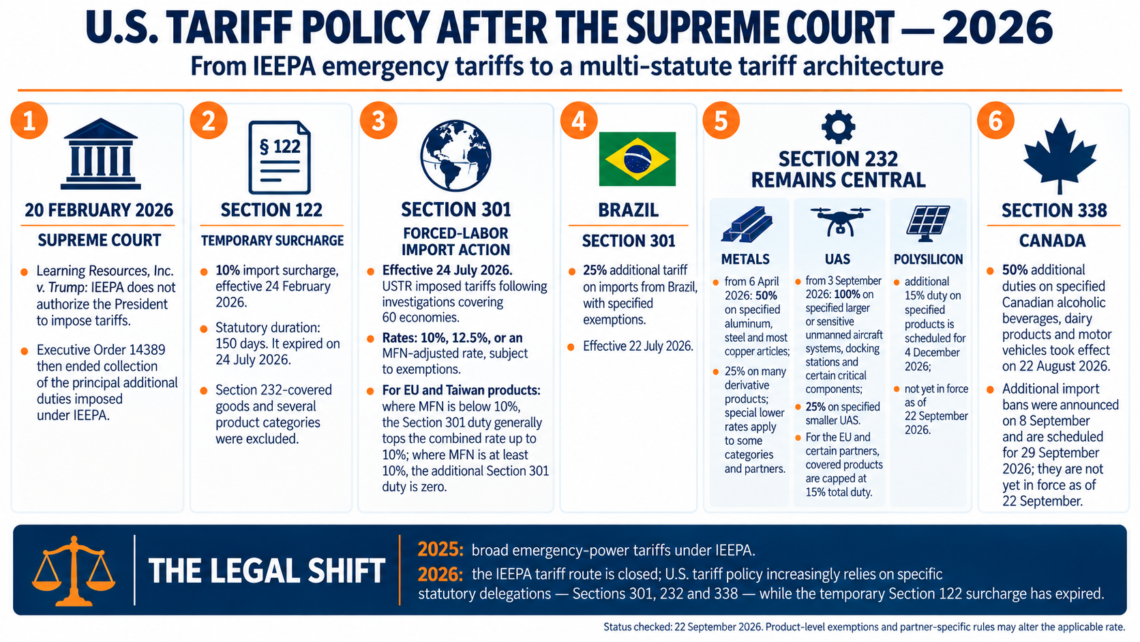
After the Supreme Court: How U.S. Tariff Policy Was Rebuilt in 2026

From IEEPA emergency tariffs to a multi-statute architecture The U.S. tariff landscape in 2026 looks markedly different from the system constructed during the first year of President Donald Trump’s second term. The change is not that tariffs have disappeared. Rather, the legal architecture supporting them has been substantially reorganised. A useful starting point is the
Continue reading After the Supreme Court: How U.S. Tariff Policy Was Rebuilt in 2026

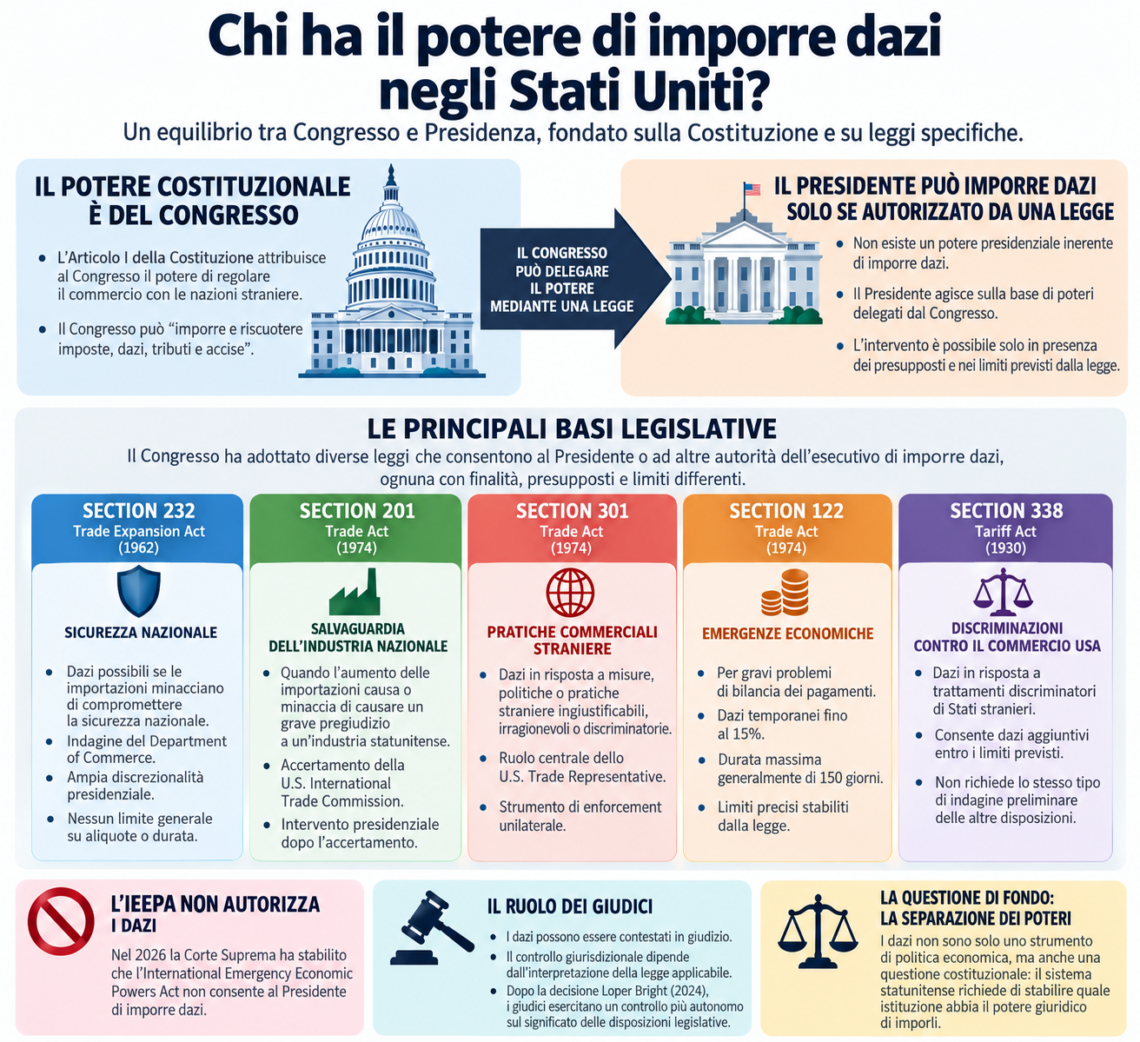
Who Has the Power to Impose Tariffs in the United States?

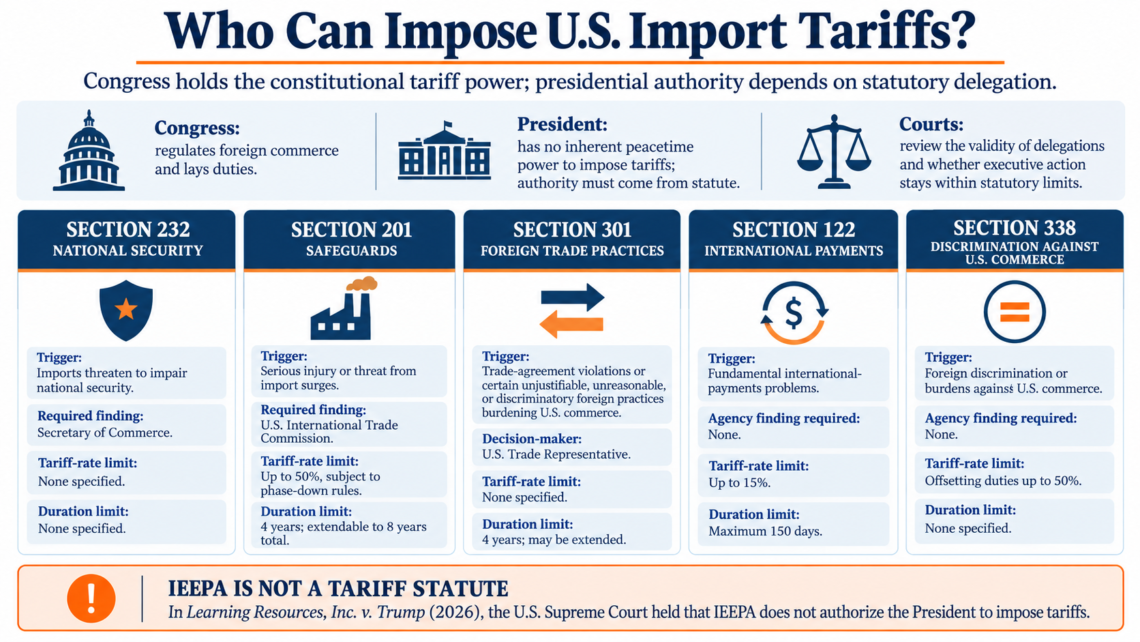
Who Has the Power to Impose Tariffs in the United States?

Congress, the President, and the changing constitutional law of U.S. trade policy Tariffs have returned to the centre of U.S. economic and foreign policy. They are increasingly used not only to protect domestic industries, but also to pursue broader objectives involving national security, economic security, strategic competition, supply chains, and relations with major trading partners.
Continue reading Who Has the Power to Impose Tariffs in the United States?

Violating EU Sanctions: Directive (EU) 2024/1226 and Italy’s New Criminal Enforcement Regime

Violating EU Sanctions: Directive (EU) 2024/1226 and Italy’s New Criminal Enforcement Regime

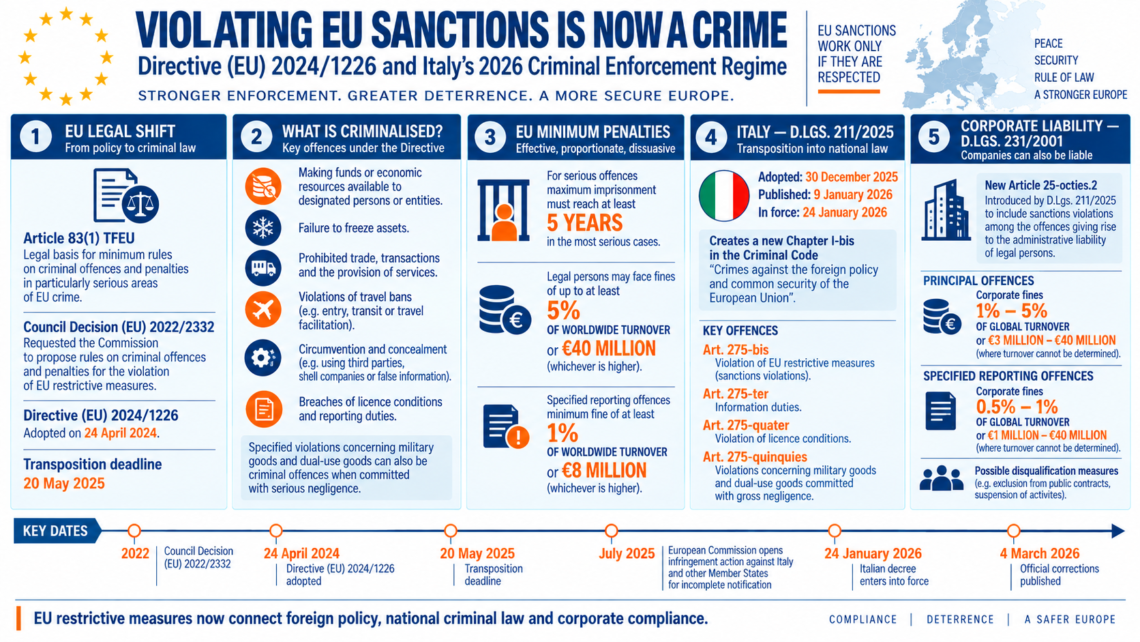
The EU shift from sanctions adoption to criminal enforcement For many years, a structural weakness of EU sanctions policy lay in enforcement. Restrictive measures such as asset freezes, trade restrictions, export bans and prohibitions on services are adopted at Union level, but the criminal consequences of violating them traditionally depended on national law. Directive (EU)
Continue reading Violating EU Sanctions: Directive (EU) 2024/1226 and Italy’s New Criminal Enforcement Regime

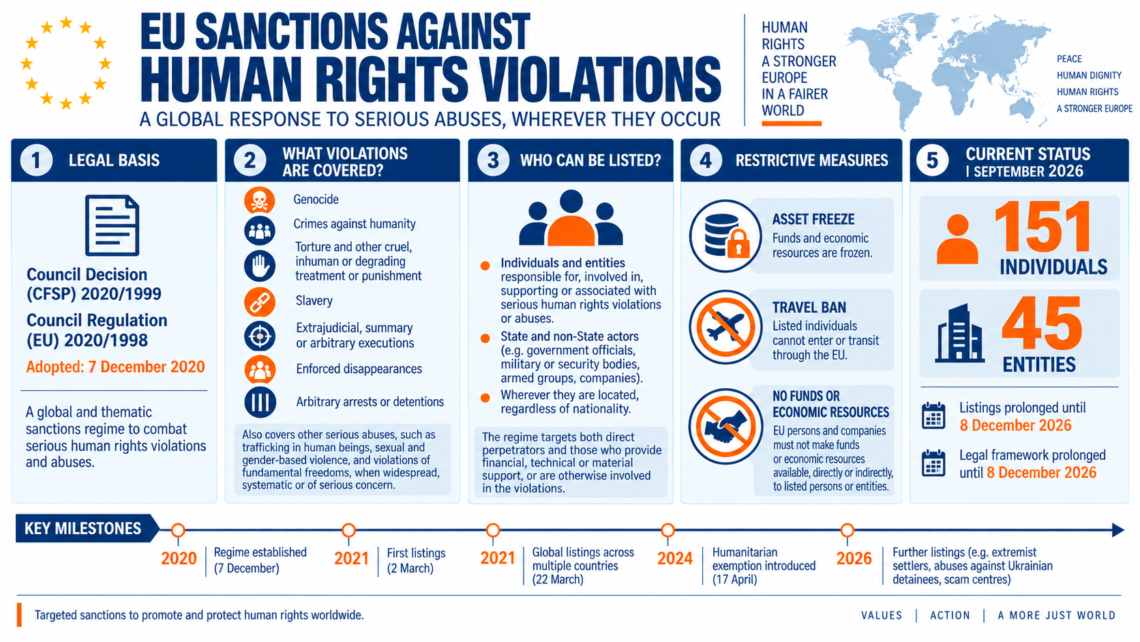
EU Sanctions against Serious Human Rights Violations: The Global Human Rights Sanctions Regime

EU Sanctions against Serious Human Rights Violations: The Global Human Rights Sanctions Regime

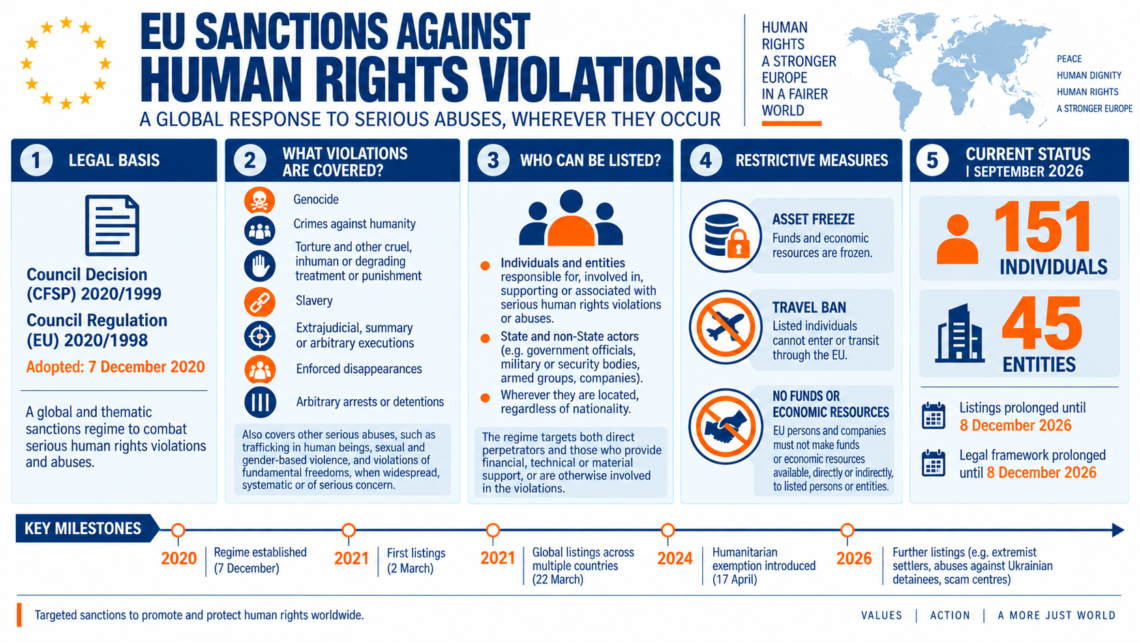
The European Union’s sanctions policy has gradually moved beyond the traditional model of restrictive measures directed at particular countries. One of the clearest expressions of this development is the EU Global Human Rights Sanctions Regime, established in December 2020 to enable the Union to target individuals and entities responsible for serious human rights violations and abuses
Continue reading EU Sanctions against Serious Human Rights Violations: The Global Human Rights Sanctions Regime

U.S. Section 232 Tariffs on Steel and Aluminum: From National Security Measure to Industrial Policy

U.S. Section 232 Tariffs on Steel and Aluminum: From National Security Measure to Industrial Policy

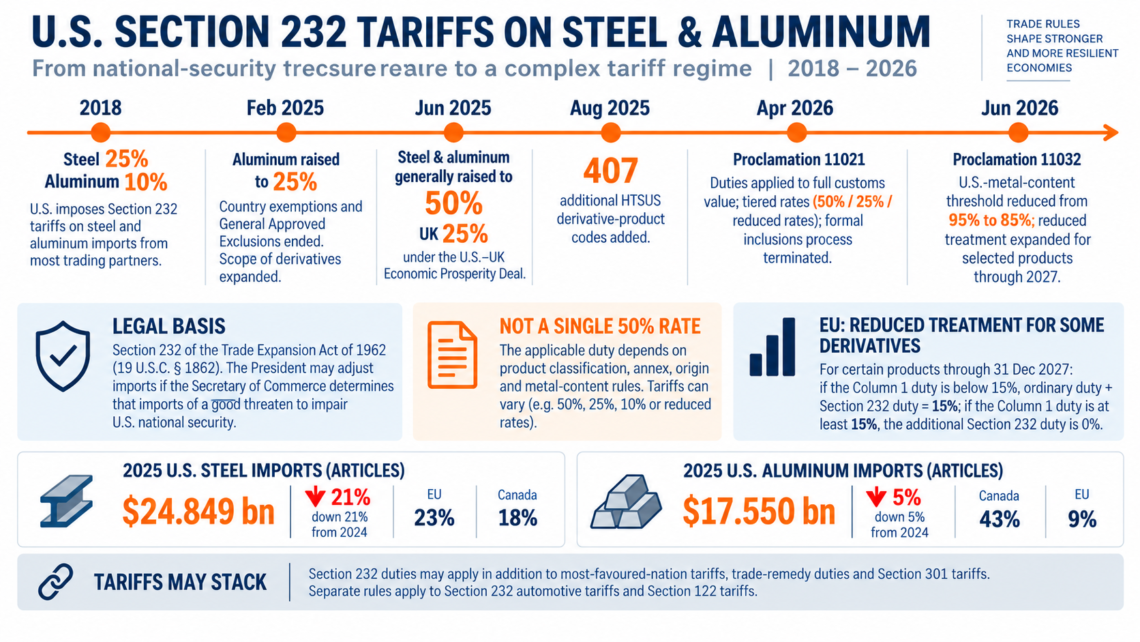
The United States’ tariffs on steel and aluminum under Section 232 of the Trade Expansion Act of 1962 have evolved into one of the most significant examples of the growing interaction between trade policy, industrial policy and national security. What began in 2018 as a relatively straightforward system of additional duties on imported steel and
Continue reading U.S. Section 232 Tariffs on Steel and Aluminum: From National Security Measure to Industrial Policy

The United Nations 1267 and 1373 Counter-Terrorism Frameworks: A Legal Comparison

The United Nations 1267 and 1373 Counter-Terrorism Frameworks: A Legal Comparison

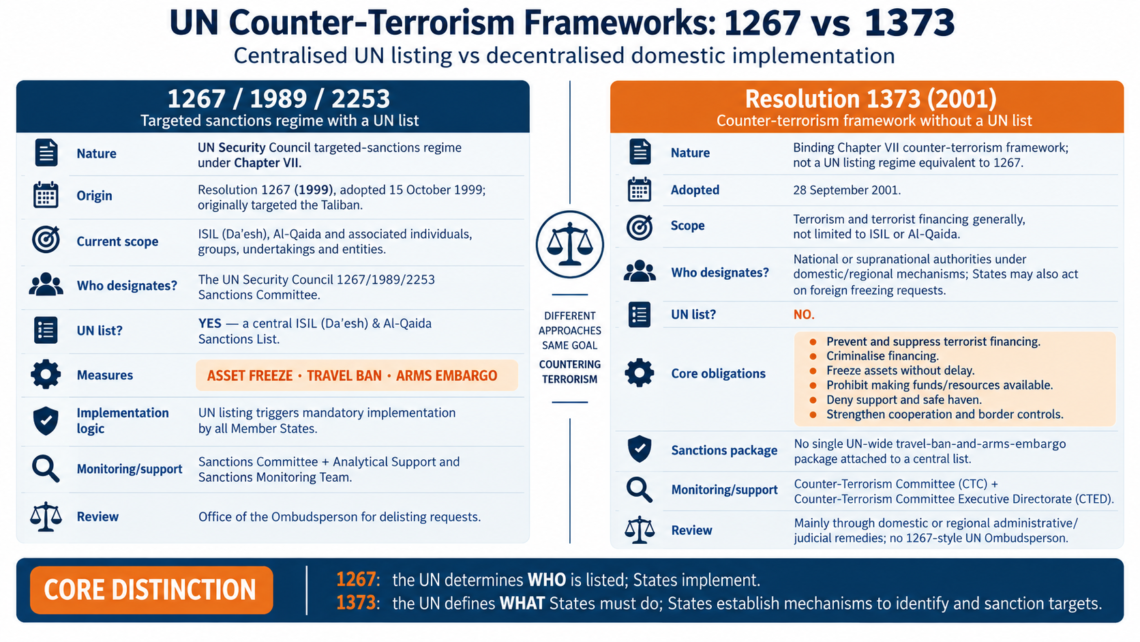
Security Council resolutions 1267 (1999) and 1373 (2001) are frequently treated as two components of the same international counter-terrorism architecture. That is correct at a functional level, particularly in relation to terrorist financing and asset freezing. Legally, however, the two frameworks operate through substantially different regulatory techniques. The essential distinction is that the 1267 framework
Continue reading The United Nations 1267 and 1373 Counter-Terrorism Frameworks: A Legal Comparison

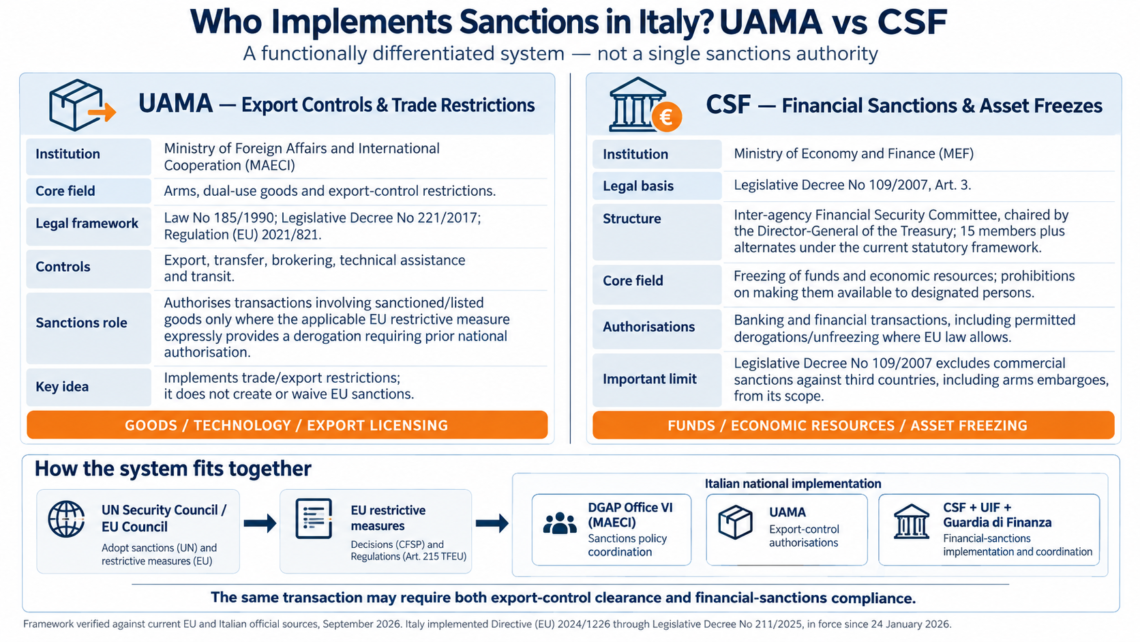
Who Implements Sanctions in Italy? UAMA, the Financial Security Committee (CSF), and a Deliberately Divided System

Who Implements Sanctions in Italy? UAMA, the Financial Security Committee (CSF), and a Deliberately Divided System

When lawyers speak of the “Italian sanctions authority”, the expression is convenient but potentially misleading. Italy does not entrust the implementation of international and European Union restrictive measures to a single administrative body. The national system is deliberately fragmented by function. The clearest example is the division between the Autorita Nazionale UAMA at the Ministry of Foreign
Continue reading Who Implements Sanctions in Italy? UAMA, the Financial Security Committee (CSF), and a Deliberately Divided System

EU Sanctions against Serious Human Rights Violations

EU Sanctions against Serious Human Rights Violations

The European Union’s sanctions policy has gradually moved beyond the traditional model of restrictive measures directed at particular countries. One of the clearest expressions of this development is the EU Global Human Rights Sanctions Regime, established in December 2020 to enable the Union to target individuals and entities responsible for serious human rights violations and abuses
Continue reading EU Sanctions against Serious Human Rights Violations

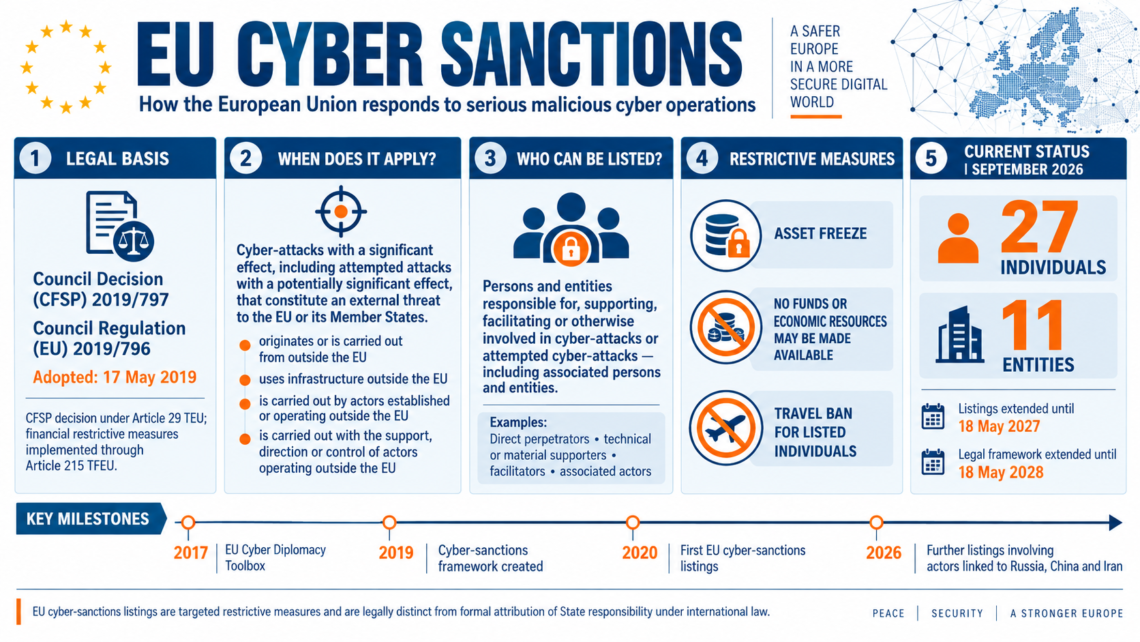
EU Cyber Sanctions: From Cyber Diplomacy to Targeted Restrictive Measures

EU Cyber Sanctions: From Cyber Diplomacy to Targeted Restrictive Measures

Cyber operations have become an increasingly important dimension of international security. They may disrupt critical infrastructure, interfere with public institutions, compromise classified information or affect essential services without crossing a territorial border in the traditional sense. For the European Union, this has raised a difficult foreign-policy question: how can malicious cyber conduct be met with
Continue reading EU Cyber Sanctions: From Cyber Diplomacy to Targeted Restrictive Measures

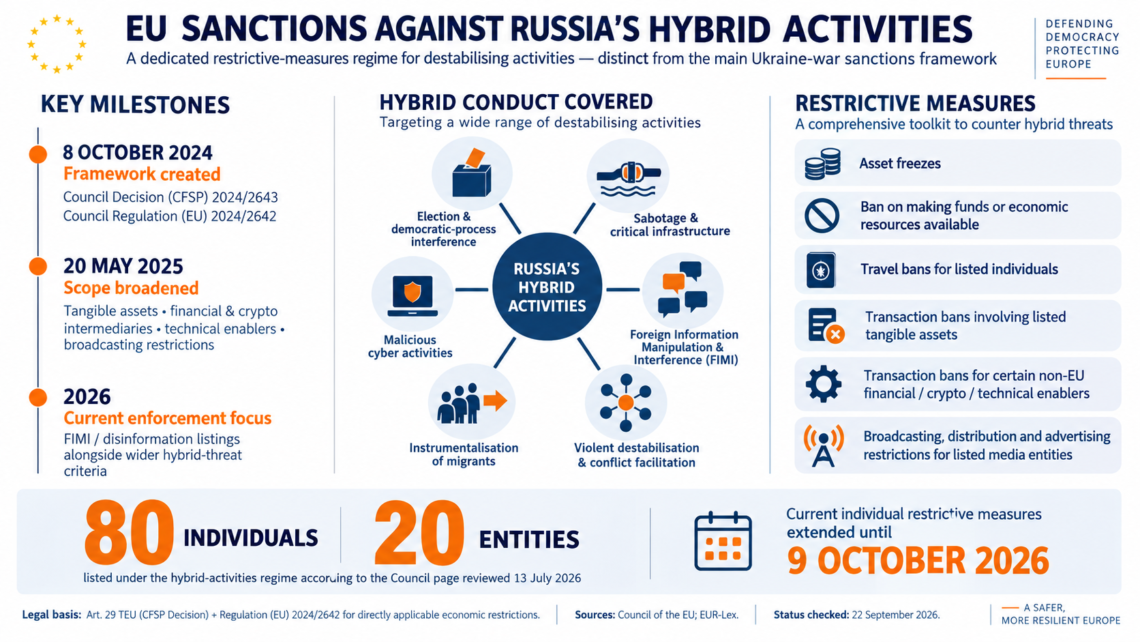
EU Sanctions against Russia’s hybrid activities

EU Sanctions against Russia’s hybrid activities

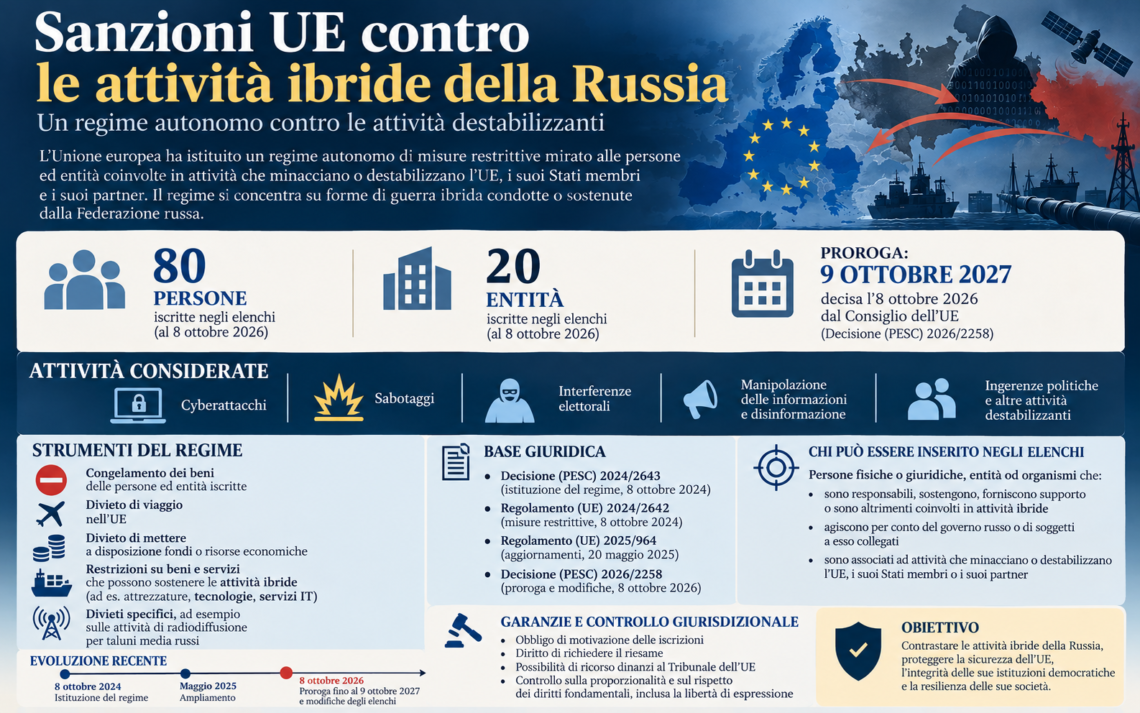
The European Union’s response to Russian hybrid activities has developed into a distinct sanctions regime with an increasingly broad reach. Rather than focusing exclusively on Russia’s military aggression against Ukraine, the framework addresses forms of destabilisation that operate across the boundaries between external security, cyber operations, information manipulation, interference with democratic processes and attacks on
Continue reading EU Sanctions against Russia’s hybrid activities

EU sanctions regime sanctions regime directed against the proliferation and use of chemical weapons

EU sanctions regime sanctions regime directed against the proliferation and use of chemical weapons

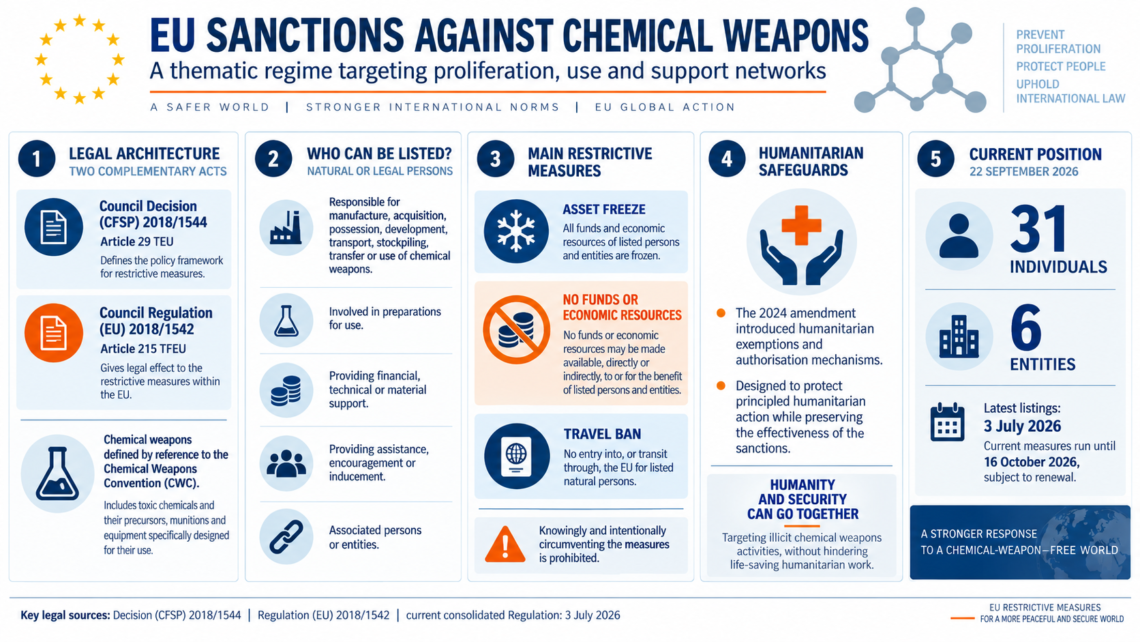
The European Union has developed a distinct sanctions regime specifically directed against the proliferation and use of chemical weapons. Unlike geographically defined sanctions regimes, this framework is thematic: designation depends on conduct connected with chemical weapons rather than on nationality, territorial location or involvement in a particular conflict. The regime was established in October 2018,
Continue reading EU sanctions regime sanctions regime directed against the proliferation and use of chemical weapons

The Lindsey O. Graham Sanctioning Russia and Iran Act of 2026

The Lindsey O. Graham Sanctioning Russia and Iran Act of 2026

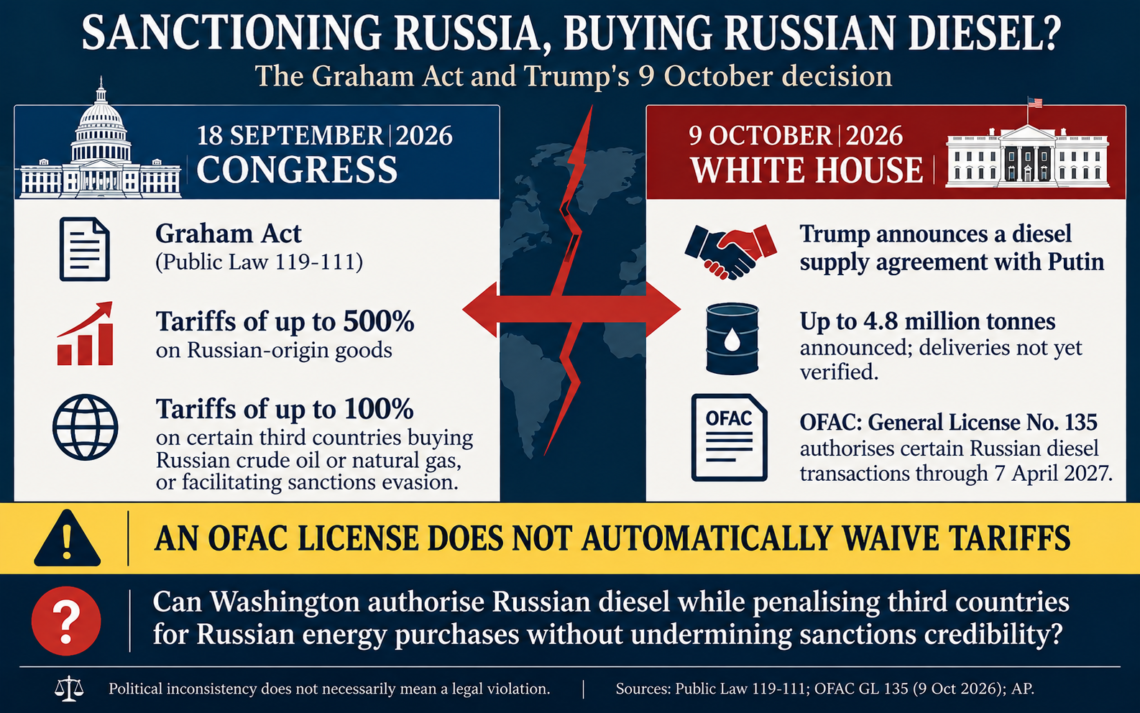
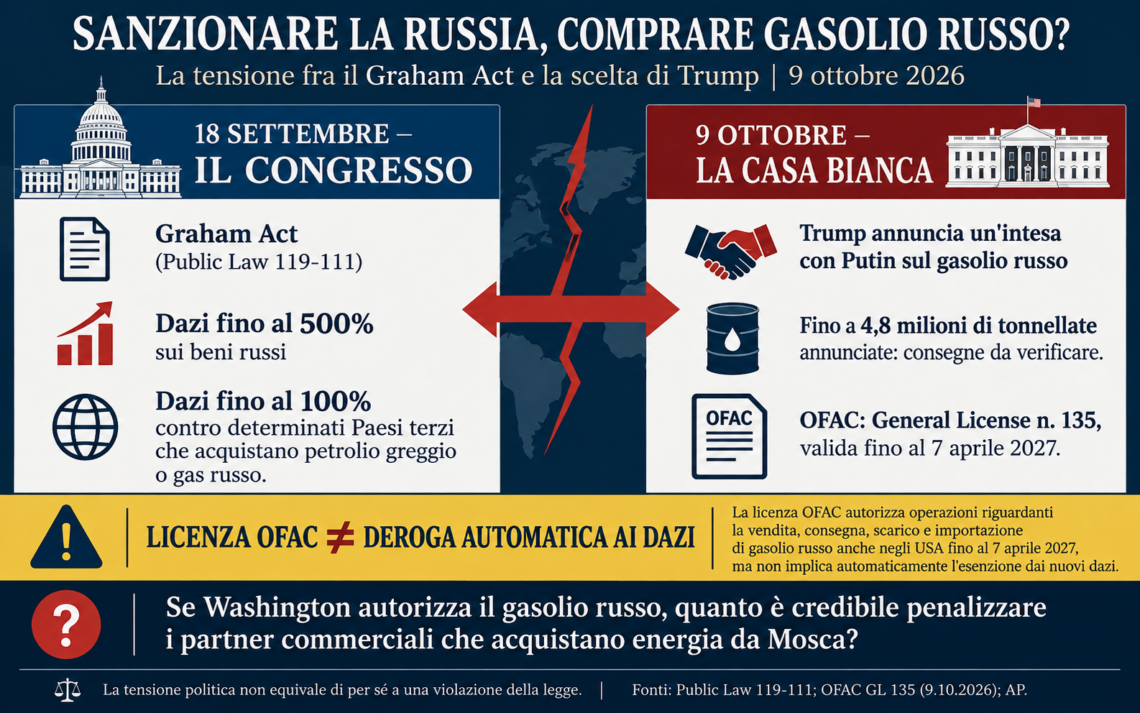
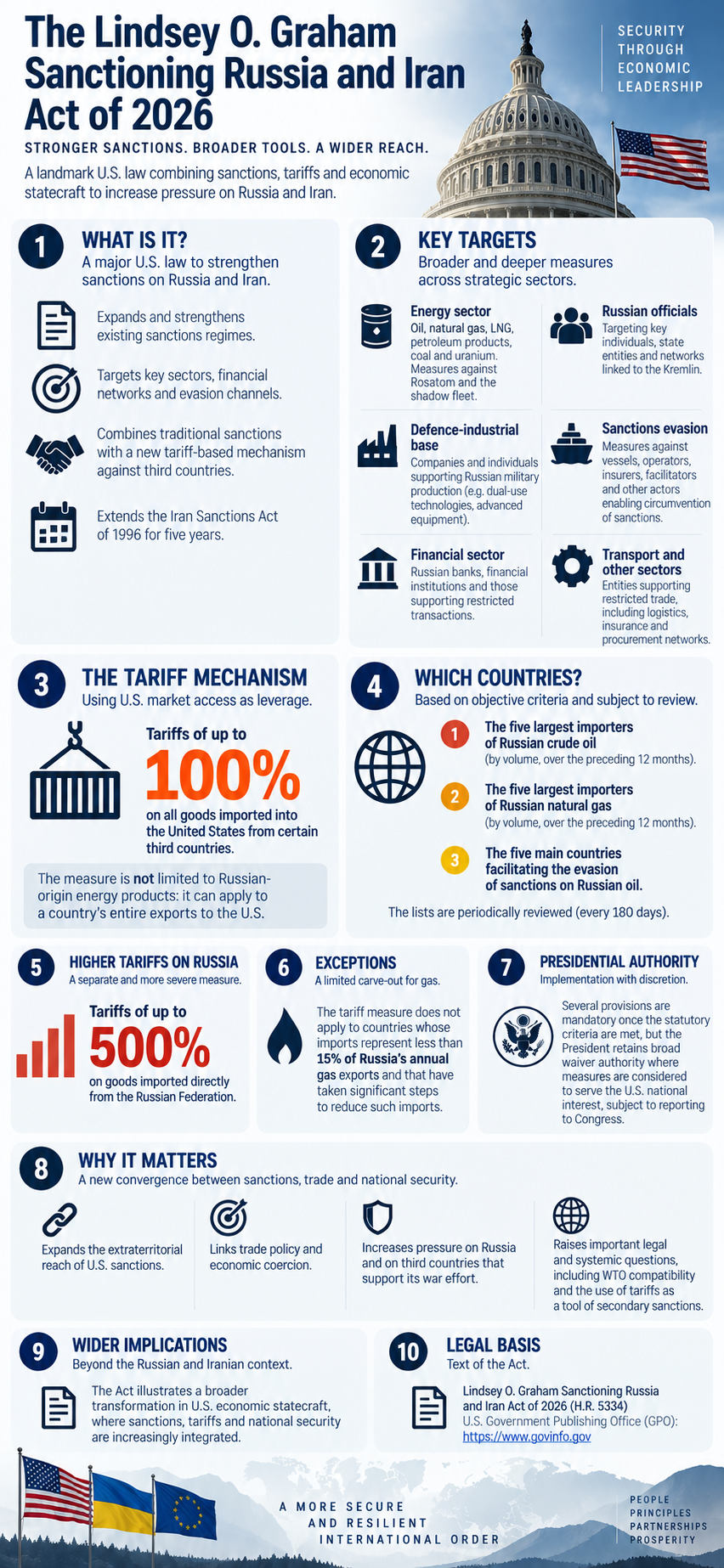
The United States Congress has approved the Lindsey O. Graham Sanctioning Russia and Iran Act of 2026, the most significant legislative package of new sanctions against Russia adopted since the beginning of the second Trump administration. Named after Senator Lindsey Graham, who had been one of the principal sponsors of the initiative before his death in
Continue reading The Lindsey O. Graham Sanctioning Russia and Iran Act of 2026

Gagarina v Council: State Propaganda, Artistic Expression and the Limits of EU Sanctions

Gagarina v Council: State Propaganda, Artistic Expression and the Limits of EU Sanctions

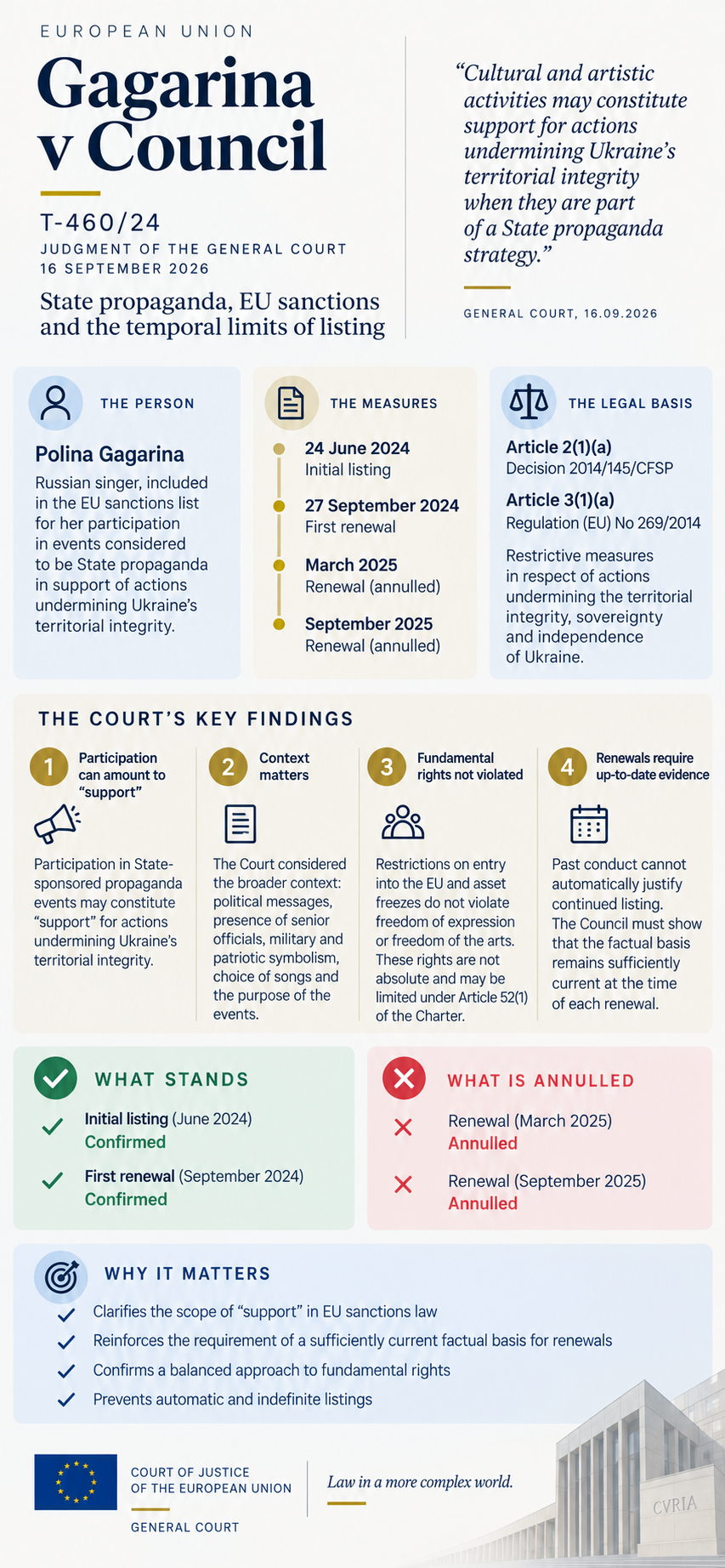
On 16 September 2026, the General Court delivered its judgment in Gagarina v Council (T-460/24), concerning the inclusion of Russian singer Polina Gagarina on the EU sanctions list relating to actions undermining the territorial integrity, sovereignty and independence of Ukraine. The judgment is significant for two reasons. First, it confirms that participation in State-sponsored propaganda events may
Continue reading Gagarina v Council: State Propaganda, Artistic Expression and the Limits of EU Sanctions

Security in the State of the Union 2026 – Letter of Intent

Security in the State of the Union 2026 – Letter of Intent

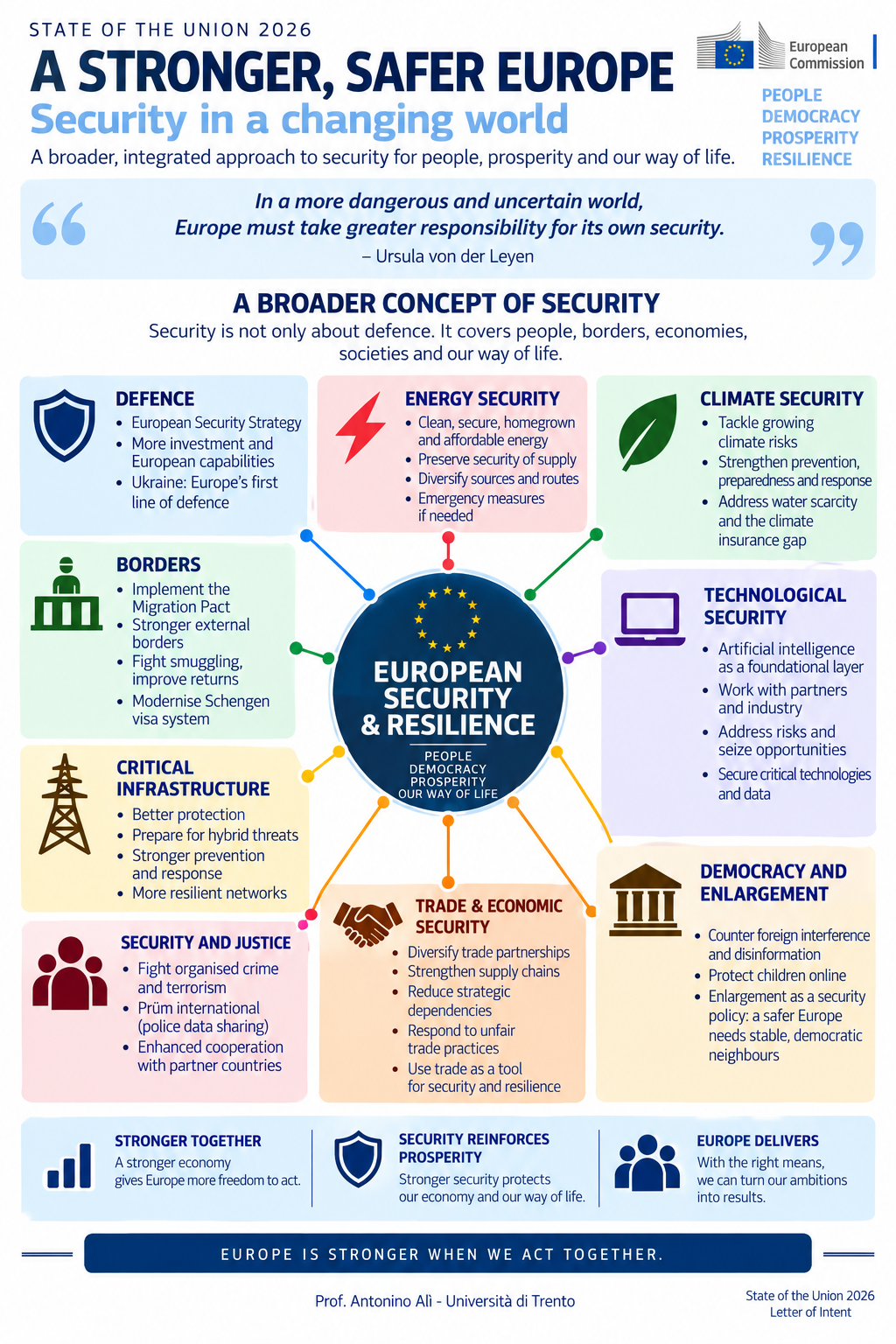
The document does not treat security as a self-contained policy field. Instead, security functions as a cross-cutting category connecting defence, borders, critical infrastructure, energy, democratic resilience, artificial intelligence, enlargement and economic policy. 1. European security and defence The clearest passage states that, in a more dangerous and uncertain world, Europe must take greater responsibility for
Continue reading Security in the State of the Union 2026 – Letter of Intent

The Dutch Intelligence Failure Before Putin’s Invasion

The central lesson from de Volkskrant’s investigation into Dutch intelligence before Russia’s 2022 invasion of Ukraine is not simply that the AIVD and MIVD “missed” the invasion. It is more troubling than that: they had many of the relevant indicators, but interpreted them through the wrong analytical frame.  According to the article, Dutch intelligence agencies were
Continue reading The Dutch Intelligence Failure Before Putin’s Invasion

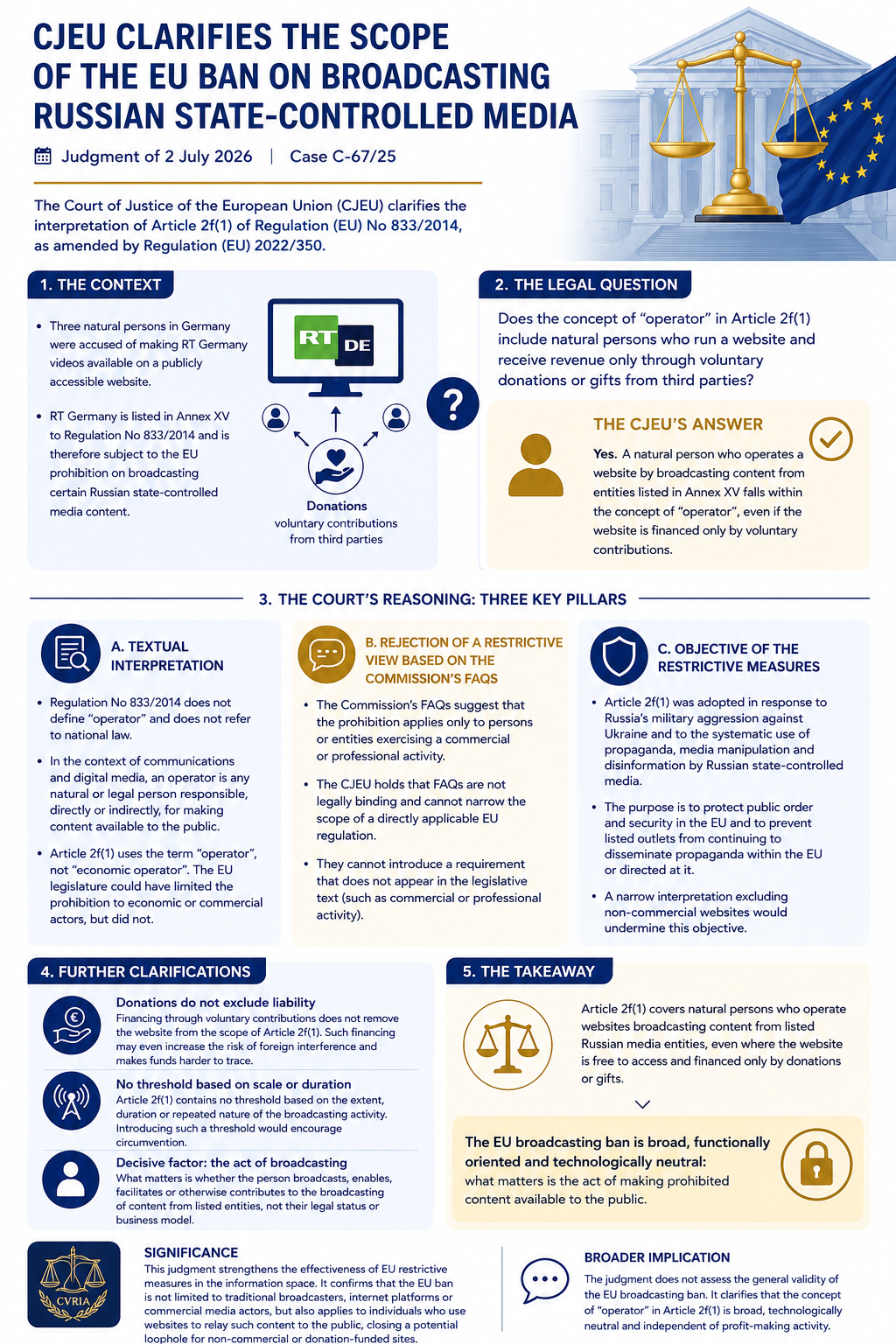
The CJEU Clarifies the Scope of the EU Ban on Broadcasting Russian State-Controlled Media

The CJEU Clarifies the Scope of the EU Ban on Broadcasting Russian State-Controlled Media

I had been waiting for this one. Case C-67/25 had been languishing on the Court’s docket for months, and for anyone keeping an eye on how the EU enforces its information sanctions against Russia — genuinely enforces them, not just on paper — the preliminary reference out of Germany posed the kind of question that
Continue reading The CJEU Clarifies the Scope of the EU Ban on Broadcasting Russian State-Controlled Media

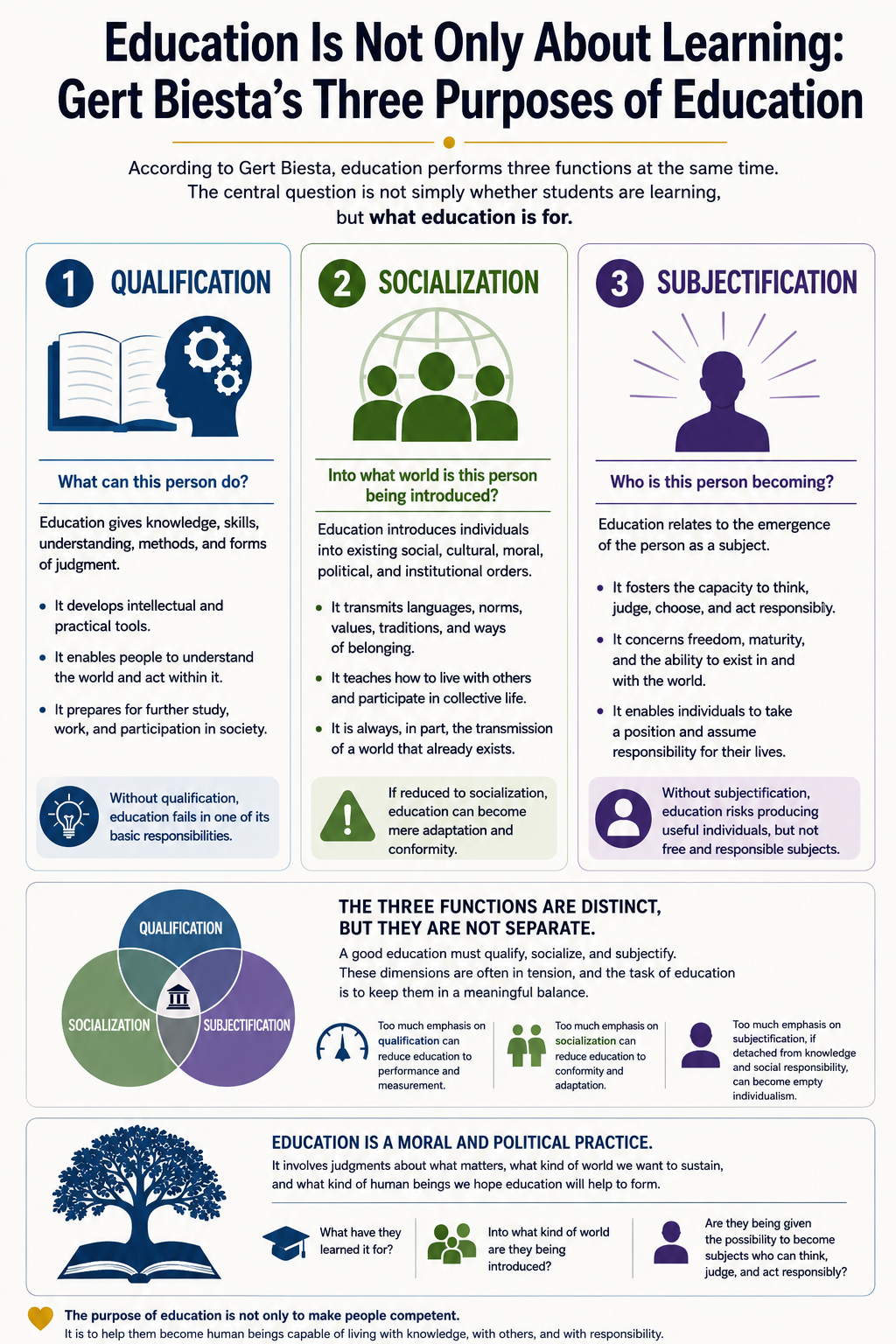
What Is Education Actually For?

What Is Education Actually For?

There is a vocabulary that saturates almost every conversation about education today. Learning outcomes. Skills. Performance indicators. Employability. Assessment. Measurable results. You hear it in faculty meetings, in ministerial documents, in accreditation reports, in the way students themselves describe what they expect from a degree. It is not that any of this is wrong, exactly.
Continue reading What Is Education Actually For?

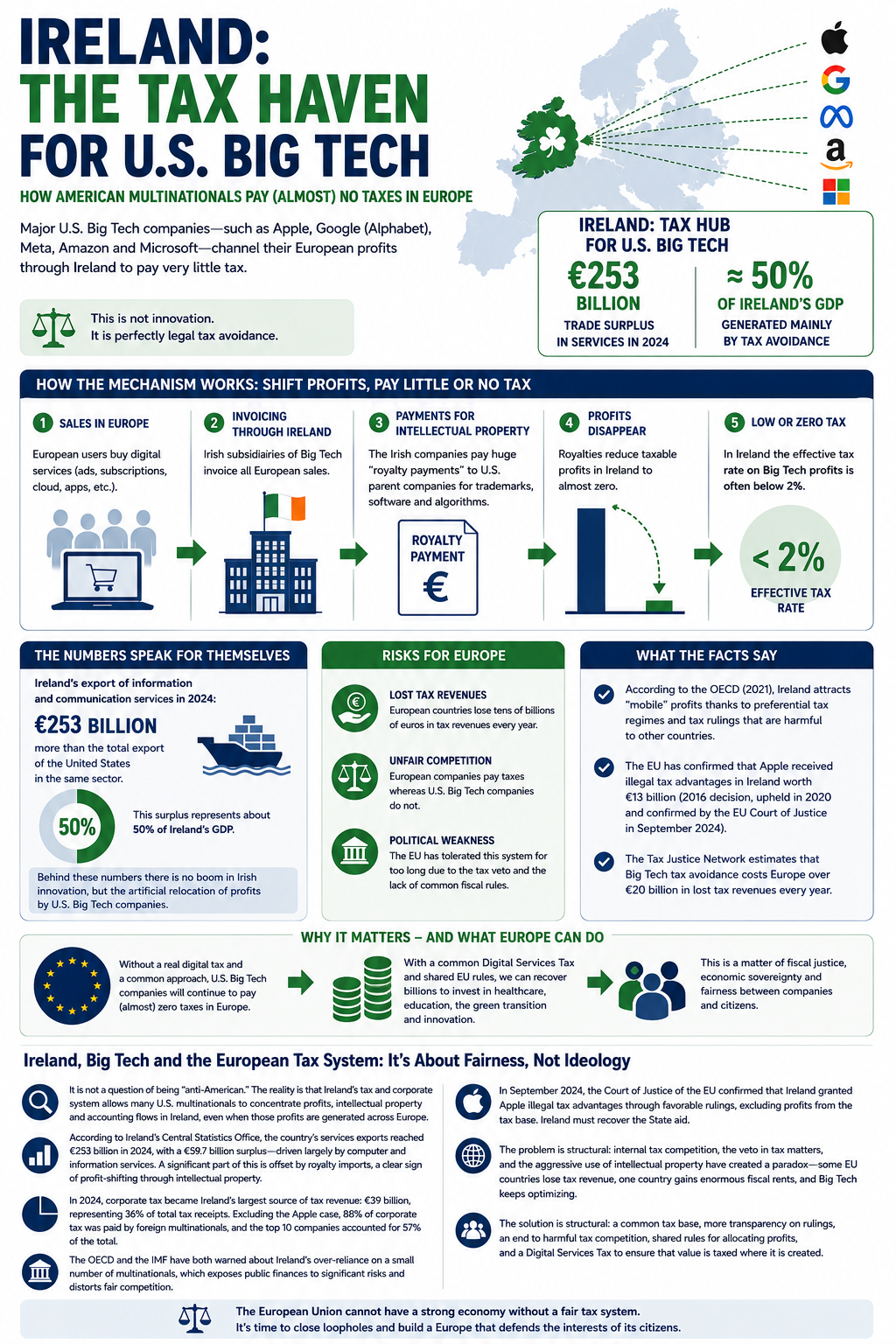
Ireland, Big Tech and the European Tax System: this is about fairness, not ideology

Ireland, Big Tech and the European Tax System: this is about fairness, not ideology

Calling Ireland a tax haven is a good way to end a conversation before it starts. The phrase is politically loaded, slightly unfair, and — this is the problem — not entirely wrong. Ireland is not the Cayman Islands. It has real factories, real offices, real workers, real universities producing real graduates who go to
Continue reading Ireland, Big Tech and the European Tax System: this is about fairness, not ideology

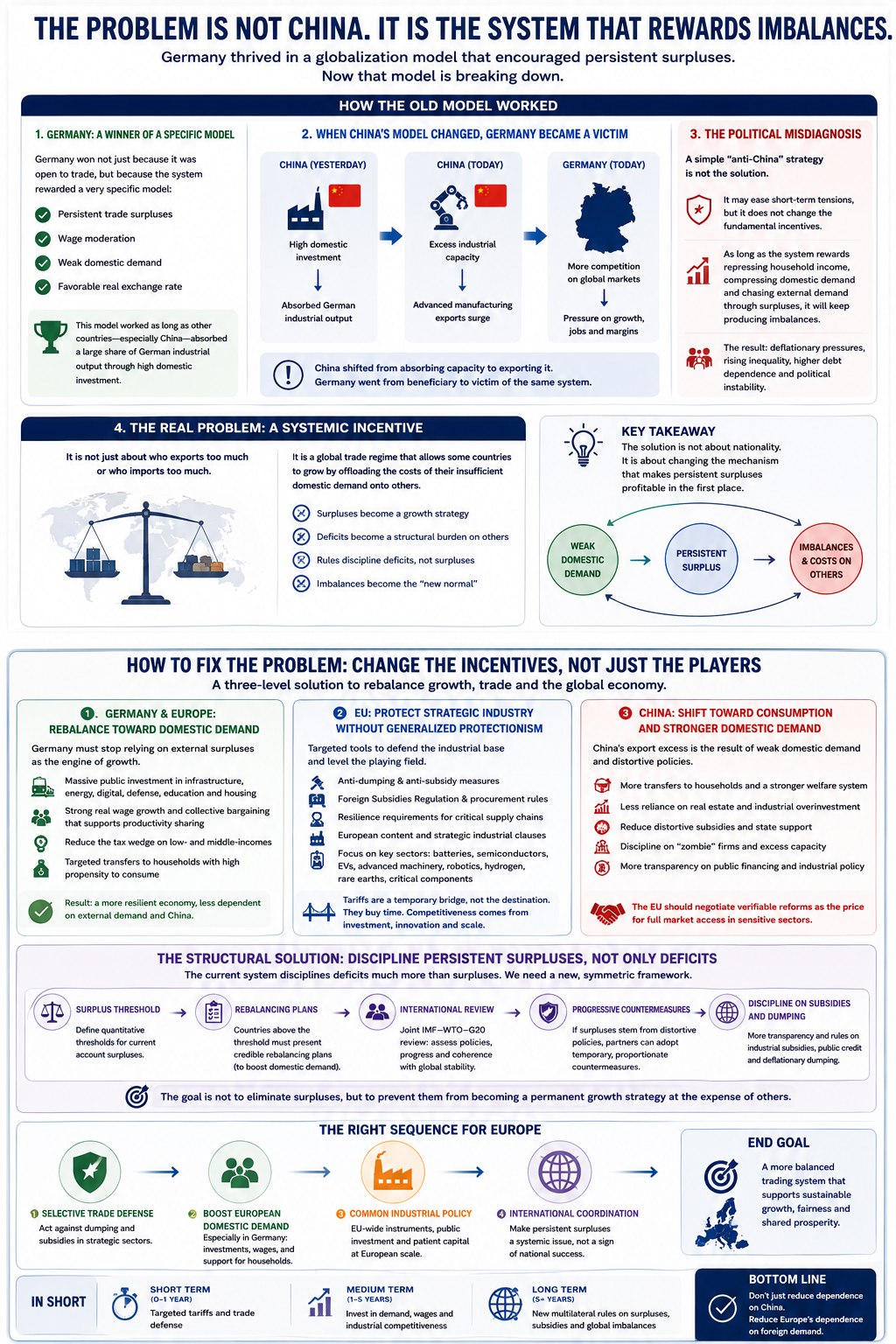
Germany as Beneficiary and Victim of the Same System — and the Limits of Unilateral Rebalancing

Germany as Beneficiary and Victim of the Same System — and the Limits of Unilateral Rebalancing

Germany did not win globalisation in general. It won a particular globalisation — one that handsomely rewarded countries willing to run persistent trade surpluses, hold wages down, starve domestic demand, and ride a real exchange rate that competitors locked inside the euro could not devalue away. The research on this is extensive and, at this point, fairly
Continue reading Germany as Beneficiary and Victim of the Same System — and the Limits of Unilateral Rebalancing

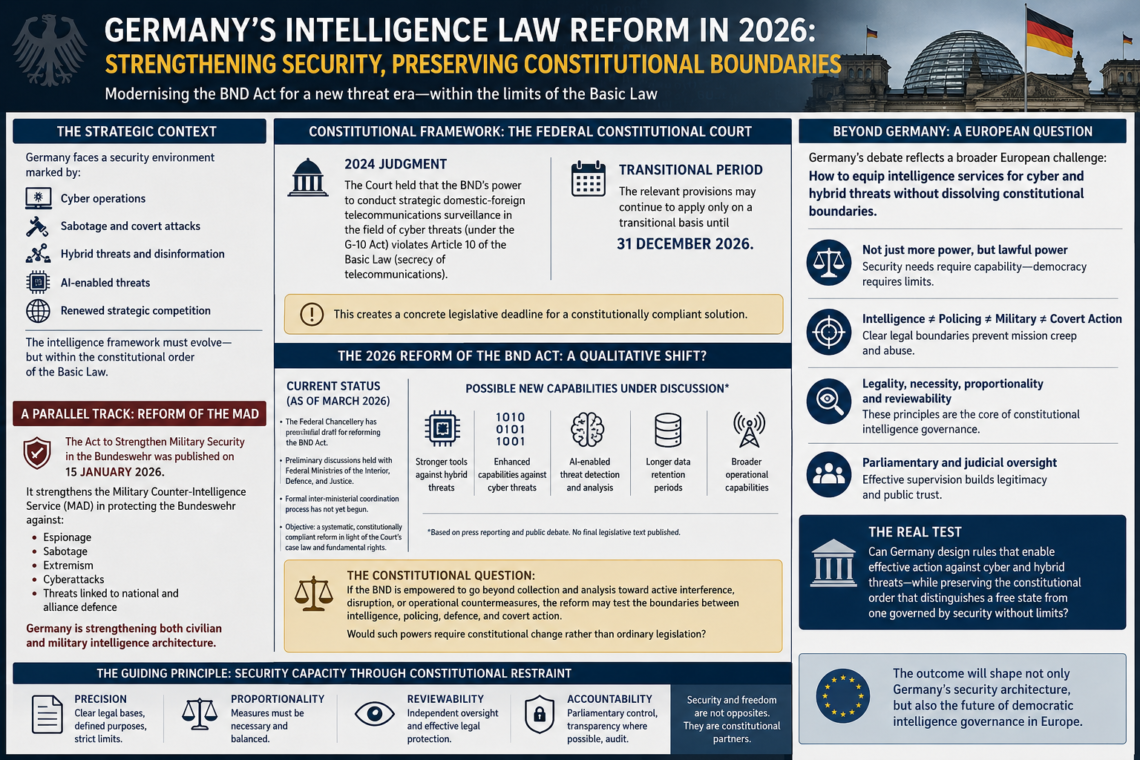
Germany’s 2026 intelligence reform agenda: operational capacity, constitutional limits, and the future of the BND

Germany’s 2026 intelligence reform agenda: operational capacity, constitutional limits, and the future of the BND

Germany is entering a decisive phase in the reform of its intelligence law. The debate is no longer limited to technical adjustments after constitutional litigation. It now concerns the future institutional role of the federal intelligence services, especially the Bundesnachrichtendienst (BND), in an environment shaped by cyber operations, sabotage, hybrid threats, and renewed strategic competition. The
Continue reading Germany’s 2026 intelligence reform agenda: operational capacity, constitutional limits, and the future of the BND

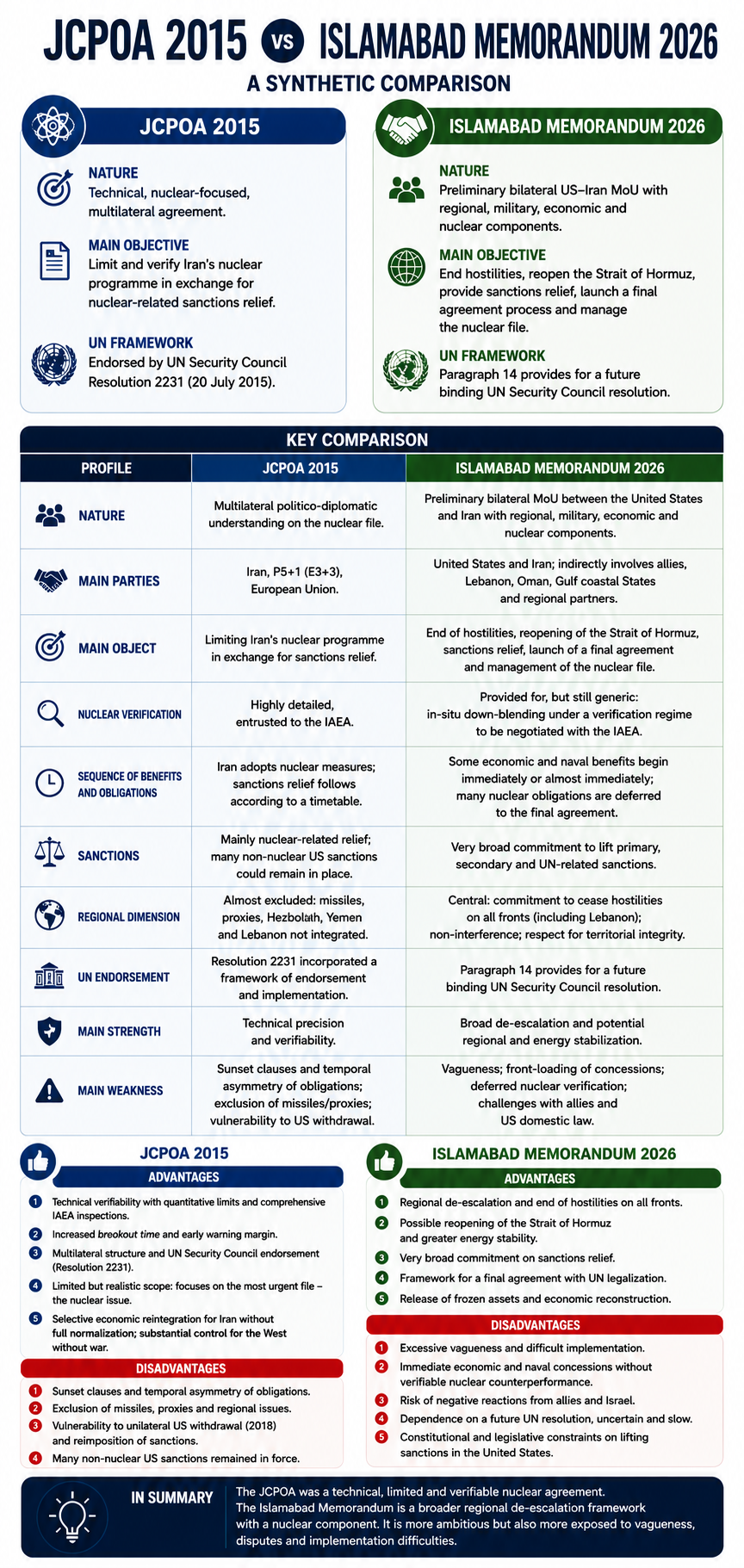
The JCPOA and the 2026 Islamabad Memorandum: Advantages, Disadvantages, and Legal-Strategic Risks

The JCPOA and the 2026 Islamabad Memorandum: Advantages, Disadvantages, and Legal-Strategic Risks

1. Structural difference: the JCPOA and the Islamabad Memorandum are not the same type of agreement The 2015 JCPOA was a technical, nuclear-focused, multilateral agreement. On one side stood Iran; on the other, China, France, Germany, Russia, the United Kingdom, the United States, and the European Union. Its object was essentially the limitation, verification, and
Continue reading The JCPOA and the 2026 Islamabad Memorandum: Advantages, Disadvantages, and Legal-Strategic Risks

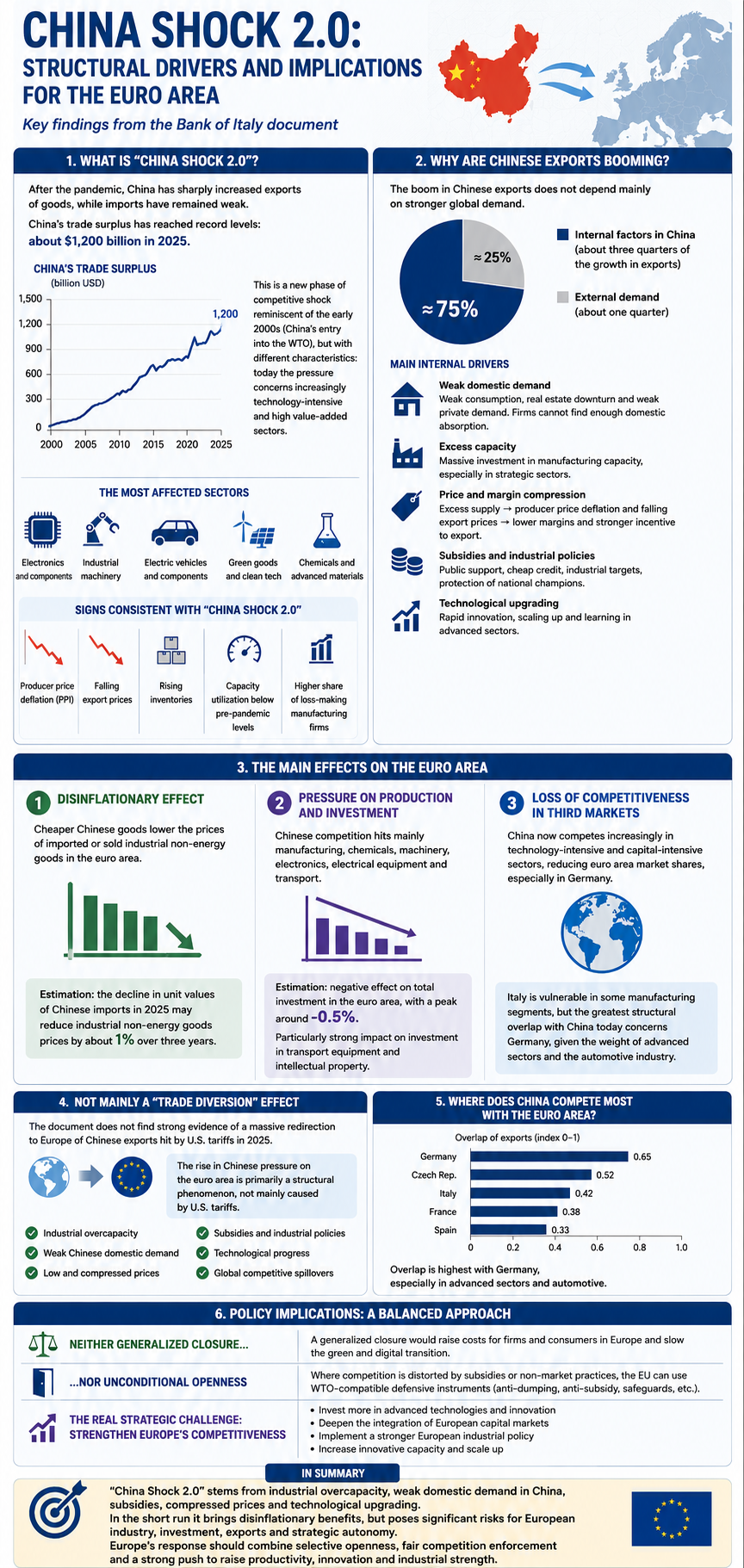
China Shock 2.0: Why Europe’s Competitiveness Challenge Is No Longer About Low-Cost Goods

China Shock 2.0: Why Europe’s Competitiveness Challenge Is No Longer About Low-Cost Goods

A recent Bank of Italy paper, China Shock 2.0: Structural Drivers and Implications for the Euro Area, argues that the post-pandemic surge in Chinese exports marks a new phase of competitive pressure on Europe. This is not simply a replay of the early-2000s “China shock” following China’s accession to the WTO. That earlier episode was largely
Continue reading China Shock 2.0: Why Europe’s Competitiveness Challenge Is No Longer About Low-Cost Goods

Europe 2031: Geopolitical Foresight Meets Constitutional Reality

Europe 2031: Geopolitical Foresight Meets Constitutional Reality

Europe 2031 is one of the most stimulating contributions to the current debate on artificial intelligence, technological sovereignty, and Europe’s place in a rapidly changing geopolitical order. Written as a fictional scenario rather than a conventional policy report, it succeeds in translating abstract discussions about AI, compute, industrial policy, and strategic dependence into a compelling
Continue reading Europe 2031: Geopolitical Foresight Meets Constitutional Reality

Strategic, Operational, and Tactical: Three Levels, One Objective

Strategic, Operational, and Tactical: Three Levels, One Objective

When discussing the strategic, operational, and tactical levels, the first mistake to avoid is treating them as three rigidly separated steps in a hierarchy. It is not enough to say that the strategic level is “more important,” the operational level is “intermediate,” and the tactical level is “lower.” That representation may be useful as a
Continue reading Strategic, Operational, and Tactical: Three Levels, One Objective

When U.S. Sanctions Meet EU Banking Rights: The CJEU’s Judgment in Jenec — Case C-81/24

When U.S. Sanctions Meet EU Banking Rights: The CJEU’s Judgment in Jenec — Case C-81/24

When U.S. Sanctions Meet EU Banking Rights: The CJEU’s Judgment in Jenec — Case C-81/24 On 11 June 2026, the Court of Justice of the European Union delivered its judgment in Jenec, Case C-81/24, concerning access to basic banking services where a consumer appears on a United States sanctions list. The case arose in Slovenia. In 2022, a
Continue reading When U.S. Sanctions Meet EU Banking Rights: The CJEU’s Judgment in Jenec — Case C-81/24

Legal Research in the Age of AI

Legal Research in the Age of AI

This continues from the previous post. Those who do research in a law faculty don’t disappear. But the source of their value changes. The most fragile part of legal research is the part that resembles standardizable informational work: searching for sources, summarizing articles, reconstructing case law, producing literature reviews, comparing legal texts, preparing first drafts. These
Continue reading Legal Research in the Age of AI

What will still matter when intelligence becomes cheap?

What will still matter when intelligence becomes cheap?

Much of the debate on artificial intelligence is framed around a simple question: Which jobs will AI replace? This book asks a better one: Which parts of work become more valuable when AI makes many cognitive tasks cheaper? What will still matter when intelligence becomes cheap? This is the central question at the heart of the forthcoming volume Messy
Continue reading What will still matter when intelligence becomes cheap?

Not All Energy Shocks Are Created Equal: What the ECB Should Learn from the Inflation Surge

Not All Energy Shocks Are Created Equal: What the ECB Should Learn from the Inflation Surge

The euro area’s inflation shock of 2022–2023 was not simply a story about prices rising too fast. It was a stress test for monetary policy in an age of geopolitical fragmentation, energy insecurity, and recurring supply disruptions. Three recent papers prepared for the European Parliament’s ECON Committee examine precisely this issue. They converge on one
Continue reading Not All Energy Shocks Are Created Equal: What the ECB Should Learn from the Inflation Surge

Why Europe’s challenge is not invention, but scale, risk, capital, and institutional speed.

Why Europe’s challenge is not invention, but scale, risk, capital, and institutional speed.

Innovation is not the same thing as invention. Invention produces novelty; innovation transforms novelty into value. That transformation depends on an ecosystem: capital able to finance uncertainty, markets large enough to reward scale, institutions fast enough to enable experimentation, and a culture mature enough to distinguish failure from negligence. Innovation is not merely a question
Continue reading Why Europe’s challenge is not invention, but scale, risk, capital, and institutional speed.

Which Security? National Interest, National Security, Essential Security Interests, Public Security, and Public Order

Which Security? National Interest, National Security, Essential Security Interests, Public Security, and Public Order

A vocabulary used loosely In contemporary legal and political debate, five expressions are made to carry a great deal of weight and are frequently treated as interchangeable: national interest, national security, essential (or fundamental) security interests of the State, public security, and public order. The promiscuity is understandable in political speech, where the point is
Continue reading Which Security? National Interest, National Security, Essential Security Interests, Public Security, and Public Order

Strategic Analysis After Prediction Failure

Strategic Analysis After Prediction Failure

ABSTRACT Strategic analysis keeps failing (Kabul, Kyiv, the late recognition that artillery and industrial capacity would decide the war) not because individuals err but because analytical systems don’t learn. Three interlocking failures explain it.  Empirical: the field keeps no score. It rewards visibility and confidence over calibration (Tetlock) and substitutes narrative plausibility for falsifiable prediction — coherent stories
Continue reading Strategic Analysis After Prediction Failure

The New Intelligence: Connecting, Exploring, Adapting

The New Intelligence: Connecting, Exploring, Adapting

Arturo Artom’s La nuova intelligenza argues that we are living through a deep transformation in the way intelligence, work, education, and personal identity function. The book’s central thesis is that the old twentieth-century model—based on stable skills, duty, linear careers, and fixed identities—is no longer sufficient in an environment shaped by artificial intelligence, digital networks, geopolitical instability,
Continue reading The New Intelligence: Connecting, Exploring, Adapting

Europe’s Tech Sovereignty Moment: from Digital Dependence to Strategic Capacity

Europe’s Tech Sovereignty Moment: from Digital Dependence to Strategic Capacity

The European Commission’s new Communication on European Tech Sovereignty marks a significant shift in the EU’s digital policy agenda. The message is clear: Europe can no longer rely primarily on regulation, resilience, and risk mitigation. It must now build, control, and scale the technologies that underpin its economy, security, and democratic life. The Communication starts from a
Continue reading Europe’s Tech Sovereignty Moment: from Digital Dependence to Strategic Capacity

A More Fragile World, a Tech Transition to Steer: What the Bank of Italy Governor’s 2025 Report Tells Us

A More Fragile World, a Tech Transition to Steer: What the Bank of Italy Governor’s 2025 Report Tells Us

Governor Fabio Panetta’s “Concluding Remarks,” delivered on 29 May 2026, paint a picture of a surprisingly resilient global economy shaken by a new energy shock — and point to artificial intelligence as the decisive battleground for Italy’s future. Every year, at the end of May, the Governor of the Bank of Italy closes the Annual
Continue reading A More Fragile World, a Tech Transition to Steer: What the Bank of Italy Governor’s 2025 Report Tells Us

Thomas Kuhn and the Art of Seeing Paradigm Shifts

Thomas Kuhn and the Art of Seeing Paradigm Shifts

Thomas Kuhn changed the way we think about scientific progress. In The Structure of Scientific Revolutions (1962), Kuhn challenged the idea that science advances simply through the steady accumulation of facts. He argued that mature sciences usually operate within a dominant “paradigm”: a shared framework of theories, methods, standards, and exemplary problems that shapes what a scientific
Continue reading Thomas Kuhn and the Art of Seeing Paradigm Shifts

Two Interventionist Capitalisms: America, China, and the End of Free-Market Innocence

Two Interventionist Capitalisms: America, China, and the End of Free-Market Innocence

Federico Fubini’s article on Donald Trump’s economic interventionism captures a crucial shift in contemporary capitalism. The phrase “a socialist in the White House” is rhetorically effective, but analytically imprecise. What is emerging in the United States is not socialism. It is a more political, strategic, and securitized form of capitalism. The most striking cases concern
Continue reading Two Interventionist Capitalisms: America, China, and the End of Free-Market Innocence

Classified or security-sensitive information in a case before the General Court

Classified or security-sensitive information in a case before the General Court

Article 105 of the General Court’s Rules of Procedure deals with how the Court handles classified or security-sensitive information in a case. The core tension it resolves: normally both parties to a case must see all evidence (the adversarial principle), but sometimes a party needs to rely on information whose disclosure would harm EU or
Continue reading Classified or security-sensitive information in a case before the General Court

The new EU rules on the screening of foreign investments

Today, the European Parliament approved new EU rules on the screening of foreign investments, with 508 votes in favour, 64 against and 90 abstentions. The reform makes screening mandatory in sensitive sectors such as defence, semiconductors, artificial intelligence, critical raw materials and financial services. The objective is to identify and address risks to security or
Continue reading The new EU rules on the screening of foreign investments