
In 1981, the Police released Too Much Information, a track from their album Ghost in the Machine. That song, and the album as a whole, have always meant a great deal to me. I was twelve or thirteen at the time, and the music has stayed bound up with memories of those years. Listening to it again today, though, is about more than revisiting my adolescence. It also brings home just how closely that title has come to describe our everyday lives.
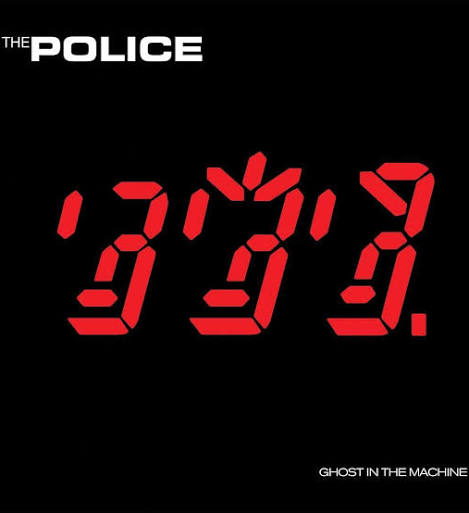
The book that gave the album its title matters here. In The Ghost in the Machine (1967), Arthur Koestler explored the relationship between our capacity for reason, our more primitive impulses and the self-destructive tendencies that can emerge in individuals and societies alike. Sting has said that he borrowed the album’s title from Koestler’s book and drew on some of its ideas while writing the songs. The result was an album that dealt with political violence, dehumanisation and the contradictions of modern society.
The song Too Much Information fits into this broader picture, but raises a more specific question: what happens when the information and stimuli coming at us exceed our ability to process them?
In the early 1980s, there were no smartphones, social media platforms or generative AI systems. But information overload was already a problem. Nor is this a meaning we are imposing on the song with the benefit of hindsight: some reviews published at the time also saw it as a criticism of the intrusive presence of the mass media and the constant barrage of images and news. Since then, the technology has changed, as have the speed and, above all, the volume of information reaching us. If anything, the problem has become harder to manage.
That is partly why I describe this blog, only half-jokingly, as “my brain’s backup drive”. I started it in part because I needed somewhere to bring some order to the things I read, the documents I come across, the news I follow and the ideas I would otherwise lose in the daily flood of information. Writing helps me return to things I have read, connect questions that initially seem unrelated and, sometimes, work out what I actually think about them. Yet there is a paradox: in trying to protect myself from information overload, I keep collecting still more material. And what I save, however carefully I organise it, does not automatically become knowledge. An archive can hold far more than we have ever really taken in.
We have never had such broad and immediate access to information. We can follow an international crisis almost as it unfolds, read a newly published court judgment, compare economic analyses or get a detailed answer to a complex question in seconds. It would be absurd to downplay that progress. But it would be just as naïve to assume that easier access to information, or faster answers, necessarily means a better understanding of the world. Having so much at our fingertips is not the same as knowing how to use it; getting an answer is not the same as understanding the problem.
We tend to blur the distinction between three different things: being informed, acquiring knowledge and understanding. The first brings us into contact with facts, data and interpretations. Knowledge demands something more: checking the reliability of sources, reconstructing the context, distinguishing established facts from hypotheses and taking objections seriously. Understanding asks still more of us: seeing how facts connect, recognising the complexity of an issue and accepting that we cannot always reach a conclusion straight away. There are no shortcuts without a cost. A clear, well-written answer may rest on faulty assumptions; a persuasive summary may leave out the very detail we need in order to understand what is going on.
As early as 1971, Herbert Simon observed that an abundance of information creates a scarcity of attention. His insight remains relevant for a simple reason: our time and capacity to concentrate are limited, while the amount of material available keeps growing. When every news story seems to demand an immediate reaction and every issue appears to call for a comment, it becomes harder to decide what is really worth reading and exploring in depth. The danger is not simply that we will know too little. It is that we will keep moving from one subject to another without spending enough time on any of them to understand it.
Artificial intelligence has made this difficulty even more apparent. It can be an invaluable tool for navigating documents, spotting connections, comparing arguments and finding our way into unfamiliar subjects. At the same time, the ease with which it produces coherent prose and seemingly complete answers can make us overlook what is missing: an unverified source, a questionable assumption, an uncertainty left unacknowledged, an alternative interpretation. An answer need not be false to be misleading. Sometimes it is enough to make a complicated issue look simple. And the more accustomed we become to instant answers, the more we risk losing the patience needed to check them.
At first glance, this might seem to contradict another familiar maxim: knowledge is power, traditionally associated with Francis Bacon. If knowledge gives us power, shouldn’t we welcome every opportunity to access more information? To a large extent, yes. The circulation of information can narrow the gap between those who know and those who do not, make public decisions more transparent, enable people to challenge unfounded claims and give more people the means to take part in public life. Criticising information overload does not mean longing for a time when information was harder to find and often reserved for a privileged few.
The apparent contradiction disappears once we distinguish between having information available and knowing how to use it.
Information is a resource; knowledge has to be earned through attention, careful method and critical judgement.
Technology can multiply the former, but it cannot, by itself, guarantee the latter. There is another point worth considering, too. In a society awash with content, power does not lie solely with those who possess the most information. It also lies with those who influence which stories reach the public, which sources are seen as credible and which issues are pushed into the background. An abundance of information does not, in itself, guarantee independent judgement or pluralism.
This is not just a personal difficulty. The ability to make sense of what is happening is essential to a democratic society. Following public decisions, assessing the reasons behind them, distinguishing facts from opinions and weighing competing interpretations all require time, expertise and reliable sources. We do not need less information, but better conditions in which to assess it. And we need more than tools that can answer our questions: we need to preserve our ability to ask good questions, challenge the answers we receive and, when necessary, admit that we do not yet know enough.
Perhaps this is where Too Much Information and the idea that knowledge is power finally meet. Knowledge can make us freer and better able to act. But if we cannot separate what matters from the noise around it, too much information may stand in the way of the very knowledge we hope to gain. My “brain’s backup drive”, then, is valuable not because of how much it can store, but because of the work of choosing, checking and thinking things through that it forces me to do.
In a world overflowing with answers, the real advantage is not always having one. It is knowing when an answer is not enough.