
Executive Order 14257 on U.S. Tariffs


The paper explores the dynamics of economic coercion and fragmentation within the international economic system, highlighting how major powers, particularly the United States and China, leverage their economic dominance over smaller nations by exploiting dependencies on essential resources, technology, or global…

Albert O. Hirschman’s National Power and the Structure of Foreign Trade explores the relationship between international commerce and national power, investigating how trade relations can become tools of political pressure. Hirschman introduces the concept of trade asymmetry: two nations can both benefit from…
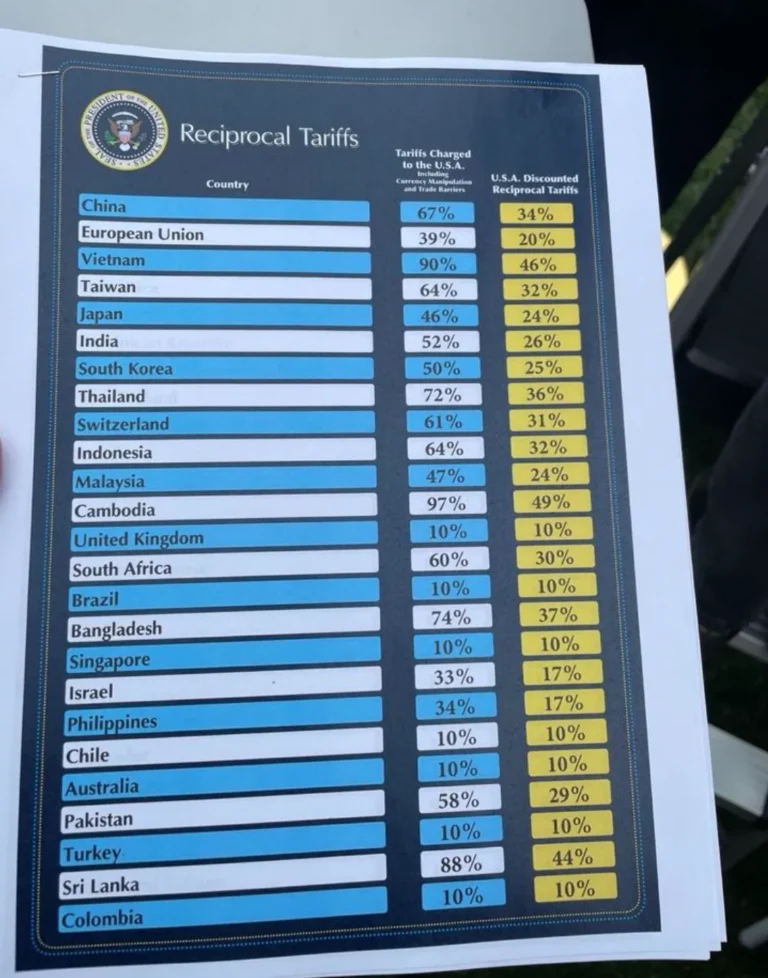
In essence, this method of calculation is profoundly misleading: It is not, as is claimed, an analysis of the actual customs tariffs (nor of the non-tariff barriers), but rather a crude arithmetical operation with no economic sense whatsoever. The reported…
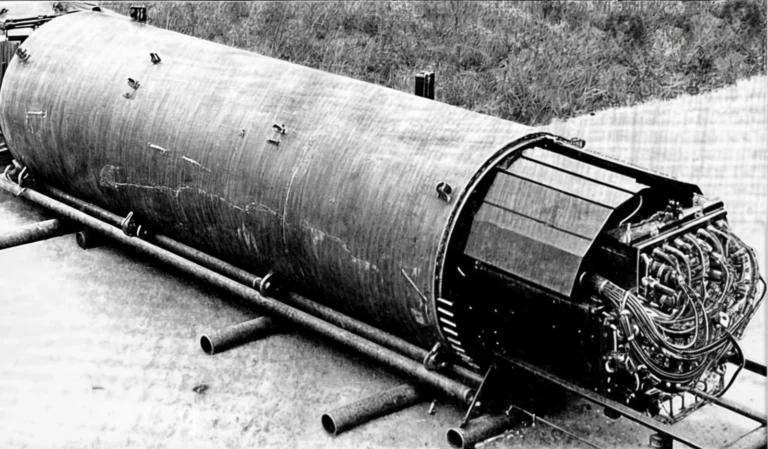
Historical Context During the Cold War, the United States sought to gain strategic intelligence on Soviet military capabilities, particularly regarding submarine and missile technologies. In the early 1970s, U.S. intelligence agencies discovered the existence of an undersea communications cable in…

The Cuban Missile Crisis is usually told as a story of presidential decision-making under pressure. Less often examined is the intelligence dimension: the reconnaissance flights that produced the evidence, the signals intercepts that shaped the timeline, and the shootdown that…

Historical context: During the Cold War, the United States conducted regular signals intelligence (SIGINT) operations using both aircraft and naval vessels to monitor the electronic communications of rival states. These missions were crucial to national security strategy and often took…

Historical context: During the Cold War, electronic intelligence (SIGINT) missions were a vital part of U.S. strategic operations. American aircraft routinely patrolled the peripheries of Soviet, Chinese, and North Korean airspace, collecting communications and radar data. These were unarmed reconnaissance…

Executive Order 14255 of March 31, 2025 creates a new initiative—the United States Investment Accelerator—to streamline and support major investments in the U.S. economy, particularly those over $1 billion. The order asserts that current U.S. regulatory systems are overly complex and burdensome, slowing…

Selective attention is a crucial cognitive function that allows the human brain to focus on specific stimuli and filter out background noise, be it visual, auditory or conceptual. In other words, it’s as if the mind has a spotlight: it…

“Grace Hopper and the Invention of the Information Age, by Kurt W. Beyer, MIT Press, Cambridge, 2012, explores the life and work of Grace Hopper and her significant contributions to the early development of computing and the subsequent emergence of…

The digital euro is a proposal by the European Commission, currently at an advanced stage of legislative development, aiming to introduce a new form of central bank money in digital format, directly accessible to the public — meaning citizens and businesses — for…
European defence documents come in two varieties: those that describe what Europe should do, and those that commit resources to doing it. The White Paper on European Defence — Readiness 2030 falls somewhere between the two, which is both its…
Federico Fubini’s article analyses Italy’s delicate position in the current geopolitical context, highlighting how the country is struggling to choose between an alliance with Europe and maintaining a privileged relationship with the United States. The author uses the experience of…
Special European Council meetings on defence tend to produce ambitious language. The test is always what follows: concrete capability commitments, or another cycle of declarations that expire before the next summit. The European Council reaffirms the need for Europe to…

European Commission President Ursula von der Leyen has introduced the “ReArm Europe” initiative, aiming to enhance the European Union’s defense capabilities in response to escalating security threats. The plan proposes mobilizing up to €800 billion for defense investments, focusing on…
Judgment of the Court in Case C-233/23 | Alphabet and Others 25 feb 2025 A company holding a dominant market position that has created a digital platform may abuse its dominance if it refuses to make that platform interoperable with…
Here a short list of the negative consequences Russia is facing because of its invasion of Ukraine. In essence, Moscow’s gamble to fracture the Euro-Atlantic order has backfired. Instead, it has fortified NATO, militarized Europe, sabotaged its own economy and diplomatic reach, and undermined…
A National Security Presidential Memorandum (NSPM) was issued with the stated purpose of encouraging foreign investment while safeguarding national security, particularly against potential threats posed by foreign adversaries such as the People’s Republic of China. The NSPM underscores the importance…

an IMF blog post The document argues that the trade balance (the difference between exports and imports) of China and the United States is primarily driven by domestic macroeconomic factors rather than industrial policies aimed at boosting exports. Why…

Establishing a U.S. sovereign wealth fund (SWF) is a concept that has garnered both interest and skepticism. While it presents opportunities for strategic investment and economic resilience, it also poses significant challenges given the United States’ fiscal landscape and political…
North Carolina has become a prominent hub for data centers in the United States due to a combination of strategic location, favorable economic policies, and robust infrastructure. Strategic Location and Infrastructure Situated on the East Coast, North Carolina offers proximity…

The decisive turning point that fundamentally transformed the system of campaign finance in the United States did not occur through congressional legislation, but rather through a ruling of the Supreme Court: Citizens United v. Federal Election Commission, issued in 2010. In…
A lie rarely springs from thin air; it is shaped around an imagined outline of the listener’s hopes, fears, and plausibilities. Oscar Wilde, in The Decay of Lying, calls deception “the telling of beautiful untrue things,” yet insists that such beauty…

Outbound investment screening is the newer and more politically delicate half of the economic security toolkit. While inbound FDI screening is now well established, the idea that a government should also scrutinise where its companies invest abroad — and potentially…
The concept of risk has become increasingly salient in international relations, particularly in the context of decision-making under uncertainty, strategic forecasting, and global governance. Despite its ubiquity, risk remains an elusive and contested notion. Within the discipline, there is a growing recognition…

The Council Implementing Regulation (EU) 2024/3188 of 16 December 2024, enforcing Regulation (EU) 2024/2642, introduces targeted restrictive measures against individuals and entities involved in destabilizing activities attributed to the Russian Federation. A significant portion of these measures addresses actions specifically related to Africa.…

Judgment of the General Court in Case T-526/19 RENV | Nord Stream 2 v Parliament and Council
The Council of the European Union has approved a declaration outlining a shared understanding among the EU and its member states regarding the application of international law to cyberspace. This milestone affirms that international law remains robust and relevant in…

A quite interesting paper by RAND: Blinders, Blunders and Wars The document points out that strategic blunders — serious missteps with unintended negative consequences — often stem from leaders relying on oversimplified or flawed mental models to navigate complex decisions.…

Strengthening Europe’s preparedness is urgent as it faces heightened risks and uncertainty, marked by a severe pandemic, major war, and record heat. Sauli Niinistö, former Finnish President and Special Adviser to the European Commission President, was tasked by President von…


The threat quantum computing poses to cryptocurrency is likely overstated for the present but demands attention for the future. A report by Chinese researchers using a D-Wave quantum computer has suggested potential risks to encryption algorithms, such as RSA, commonly…
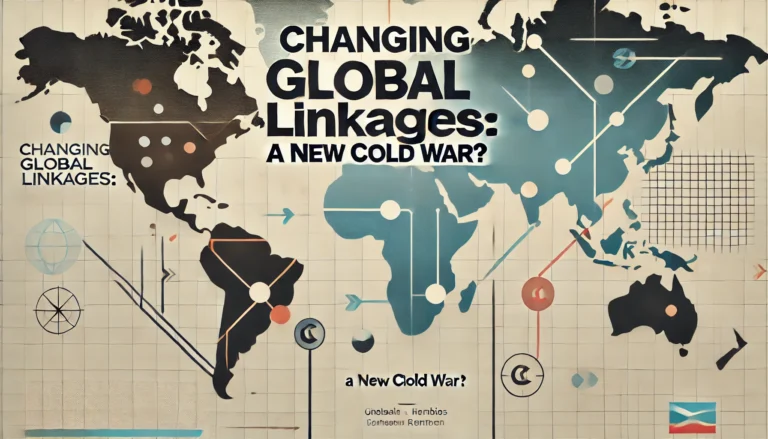
The paper titled Changing Global Linkages: A New Cold War? by Gita Gopinath, Pierre-Olivier Gourinchas, Andrea F. Presbitero, and Petia Topalova (April 2024) investigates how recent geopolitical tensions, particularly post-Ukraine invasion, are reshaping global trade and investment patterns. The…

The Fourth Annual Report on the Screening of Foreign Direct Investments into the Union (COM(2024) 464 final), released by the European Commission on October 17, 2024, provides a comprehensive analysis of the FDI screening mechanism within the European Union during…

THE TELEGRAM CASE BEFORE THE EUROPEAN COURT OF HUMAN RIGHTS I just published an article on La Comunità Internazionale, 2024, n. 3, examining the landmark decision of the European Court of Human Rights (ECHR) in the case of Podchasov v…

Correlation vs. Causation Understanding the difference between correlation and causation is fundamental for sound data analysis and decision-making. Establishing true causal relationships requires careful research design and appropriate methodologies. Understanding the difference between correlation and causation is fundamental for sound…

The Council has introduced a new framework for restrictive measures in response to Russia’s destabilizing activities abroad. This framework allows the EU to impose sanctions on individuals and entities involved in actions or policies by the Russian government that threaten…